Motown crisis: Deafening silence at Pimpri-Chinchwad's auto parts units

The first of a 3-part series captures how declining sales and job losses have hit companies in Pimpri-Chinchwad, an automobile hub bordering Pune
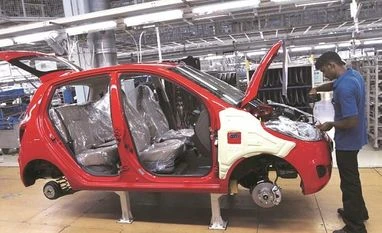
Motown crisis: Deafening silence at Pimpri-Chinchwad's auto parts units
Shally Seth Mohile Pimpri/Mumbai
4 min read Last Updated : Sep 04 2019 | 3:09 PM IST
There’s an eerie silence on the dimly-lit shop floors of most small-and medium-scale auto component makers in Maharashtra’s Pimpri-Chinchwad belt — a major auto cluster in western India that houses close to 12,000 manufacturing units. Trucks loaded with parts stand motionless at the factory gates. They cannot be dispatched as Tata Motors’ factory is on a temporary shutdown. Most SMEs in the region count the company among key customers.
 
Tata Motors’ plant at Pimpri manufactures passenger vehicles and light commercial vehicles (LCVs). But it’s not the truck market leader alone that has affected them adversely. Deep production cuts and block closures (temporary shutdowns to correct inventory) at all other commercial vehicle (CV) makers, such as Ashok Leyland, Volvo Eicher Commercial Vehicles (VECV), Bharat Benz, and Mahindra & Mahindra, have also hurt them. Many of them have had to lay off 10 to 15 per cent of their contract workers to rein in costs and tide over the current slowdown.
 
In an unprecedented move, most CV companies closed their plants for 25 working days last month, says Rajan Wadhera, president, Society of Indian Automobile Manufacturers (Siam). “Small scale auto component firms of CV makers are bleeding and will shut shop if the slowdown continues,” he said.

“From June till now, the situation has deteriorated drastically. This month’s schedule (from CV manufacturers) show that their production in September is 70 per cent less than what it was in March,” said the proprietor of a small unit in Bhosari, which is a tier one supplier to all the CV makers. “Last year, the order book was so heavy that I was struggling to get contract workers. And last month, I was forced to let go of around 15 per cent of them,” he said, adding he expected a 20 per cent drop in revenue in FY20. Last year, his company had a turnover of Rs 50 crore.
 
Some have decided to change tack altogether. Bruised by the cyclical swings in the auto market, a few like Ranvik Auto are looking to reduce their dependence on the industry, and eventually draw business from non-auto segments. “My sons no longer want to pursue the auto business,” said VM Jagtap, the 70-year old founder of Ranvik Auto, which retrenched 40-45 of its 150 workers in July. Jagtap’s company, which till recently was a supplier of sub-assemblies and frames to Tata Safari and Sumo, is staring at an empty production bay as Tata Motors has pulled the plug on the models ahead of BSVI. Ranvik Auto plans to redo its production bay and focus on making parts for the railways. The company supplies parts to some of Tata’s LCVs. But the current slowdown has impacted that too, Jagtap said.

“We are bracing for tougher times as the situation in Tata Motors’ Jamshedpur and Lucknow plants is worse,” said another supplier in the region. He expects his company’s revenue to drop from Rs 220 crore last year to Rs 175 crore this year. So far, his firm has not laid off any contract workers. “We will wait till the festivals get over,” he said.
 
However, it’s not small suppliers alone that are bearing the brunt of the crisis. A large multinational auto component manufacturer headquartered in Pune that counts Mahindra, Maruti Suzuki, VECV, Tata Motors, and Volkswagen among others as its customers is operating at half its installed capacity and has recently had to let go of 20 per cent of its contract workforce.
 
“In the previous slowdowns, there was always a balancing factor. Some segment or the other would make up for the fall in another. However, with everything down, this one is particularly bad,” an official at the MNC cited above said, adding that the company was rationalising investment and taking a relook at investments to determine what could be deferred.
 

One subscription. Two world-class reads.

Already subscribed? Log in

Subscribe to read the full story →
*Subscribe to Business Standard digital and get complimentary access to The New York Times

Smart Quarterly

₹900

3 Months

₹300/Month

SAVE 25%

Smart Essential

₹2,700

1 Year

₹225/Month

SAVE 46%
*Complimentary New York Times access for the 2nd year will be given after 12 months

Super Saver

₹3,900

2 Years

₹162/Month

Subscribe

Renews automatically, cancel anytime

Here’s what’s included in our digital subscription plans

Exclusive premium stories online

  • Over 30 premium stories daily, handpicked by our editors

Complimentary Access to The New York Times

  • News, Games, Cooking, Audio, Wirecutter & The Athletic

Business Standard Epaper

  • Digital replica of our daily newspaper — with options to read, save, and share

Curated Newsletters

  • Insights on markets, finance, politics, tech, and more delivered to your inbox

Market Analysis & Investment Insights

  • In-depth market analysis & insights with access to The Smart Investor

Archives

  • Repository of articles and publications dating back to 1997

Ad-free Reading

  • Uninterrupted reading experience with no advertisements

Seamless Access Across All Devices

  • Access Business Standard across devices — mobile, tablet, or PC, via web or app

Topics :automobile salesautomobile sector

Next Story


