Jai Corp looks to get out of Navi Mumbai SEZ
This is part of Jai Corp's efforts to raise funds as the investors of its real estate funds are increasingly demanding returns
Dev Chatterjee Mumbai Jai Corp Ltd, a company owned by Mukesh Ambani's close associate, Anand Jain, is looking at the option of selling a part of its stake in the Navi Mumbai special economic zone (SEZ).
"There are talks to sell a part of the stake in the SEZ project," a person close to the development said, requesting anonymity. "But no decision has been taken so far." This is part of Jai Corp's efforts to raise funds as the investors of its real estate funds are increasingly demanding returns.
An email and text messages sent to Jain did not elicit any response till press time.
The Navi Mumbai SEZ has failed to take off due to land acquisition problems and lack of clients from abroad. Jain and Reliance Industries Ltd (RIL) chairman Ambani, in his personal capacity, own close to 74 per cent stake in the project. City and Industrial Development Corp of Maharashtra, a state government body, owns the rest of the stake. RIL had earlier exited the Haryana SEZ projects by selling part of its stake to IL&FS.
The Navi Mumbai project was a non-starter like many SEZs in India, due to the government's dallying over the SEZ policy and land acquisition. Besides, as the land acquired by the company was scattered across Navi Mumbai, it was difficult for the company to get SEZ benefits for the project. The project has about 5,250 acres, of which the SEZ has possession of 4,125 acres. Analysts say the valuation of the SEZ will be around Rs 4,000 crore, taking only the land value into account.
An extensive agitation against the projects by locals led the company to abandon acquisition of land altogether. Jain and Ambani had acquired the SEZ project from SKIL Infrastructure, which still owns a minority stake in the project.
If the transaction materialises, it will help Jai Corp meet the demand of the investors of its two realty funds - Urban Infrastructure Opportunities Fund (UIOF) and Urban Infrastructure Real Estate Fund (UIREF) - who are irked over low returns. The funds have invested in a slew of real estate projects across India over the past six years. Some of the marquee investors in the domestic fund included Life Insurance Corp of India, State Bank of India, ICICI Bank and Axis Bank. Investors say they are worried as the performances of both funds have failed to match the projections made when launched.
A slowdown in the real estate industry and high interest rates led to many real estate projects slow down. As an investor in these projects, the fund was unable to meet the expectations of investors.
In 2006, Jain had launched UIOF with a tenure of seven years. The funds raised close to Rs 2,434 crore and invested in 34 special purpose vehicles in 15 cities in India. A year later, Jain also launched UIREF, an offshore fund of $295 million (Rs 1,640 crore). The fund with an eight-year-old tenure raised money from international investors in the Indian realty sector.
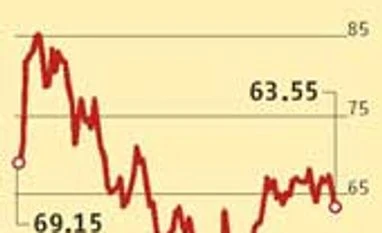
Jai Corp's scrip shed 3.05 per cent to close on Wednesday at Rs 63.55 on BSE, while the benchmark Sensex lost 0.25 per cent to 20,062.24. The stock is down six per cent since January this year. In the same period, the Sensex is up 3.5 per cent.
The stock has lost 90 per cent of its value in the last five years.

 "Jai Corp looks to get out of Navi Mumbai SEZ")


