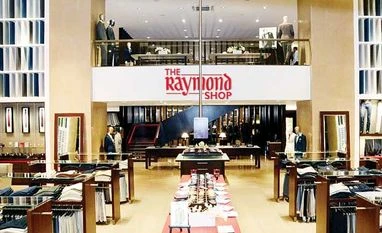
“Greed” is the older Singhania’s answer. He said that when people suddenly come into a large amount of wealth – the shares he gave over to his son were worth Rs 1,000 crore - they become arrogant and intoxicated by the power that money has given them. Raymond today has a market cap of around Rs 5,000 crore and reported revenue of Rs 3,000 crore for 2017-18.
But surely his son, who has played an active part in the company for some three decades, has always been accustomed to a gilded life? To this, Vijaypat replies that wealth is never enough for some and their greed keeps driving them to want more and more.
Gautam’s riposte is that if he was so consumed by power and control, he wouldn’t be stepping off the boards of all his companies, putting professionals in charge, and leaving daily operations to them. “My father is 81 years old and, of course, like any son, I want him to be happy. But I also wonder, why all this unwarranted media attention that he is engaging in?” he asked.
One of the allegations Vijaypat has aired to the media is that his son kicked him off the board but Gautam, 53, said his father failed to attend four consecutive meetings, flouting regulatory requirements. The board had no choice, he said, but to ask him to leave. “I’m pained at the allegation,” said Gautam. He added his father wanted ownership of JK House at Warden Road in Mumbai, which was not a viable proposition but nonetheless, said the son, the father was welcome to live there.
The root cause of the dispute is the father’s transfer of his 37 per cent stake to his son in 2015, done, said the father, in a moment of ‘stupidity’. The reason for the transfer, he explains, came from a conversation he had with his daughter-in-law. “One day I was talking to his (Gautam’s) wife who is a sensible woman, and I asked her ‘Nawaz, why isn’t Gautam working properly?’ and she said ‘Papa, he is very insecure’.”
According to the father, she added her husband was unsure as to who would get the wealth – him or his elder brother who had separated from the family 20 years earlier. That one sentence struck the father so forcefully, he says, that he signed off everything to his son, although he had originally made a discretionary trust under which the son would inherit the family money only after his death.
When asked about the incident Nawaz Singhania denied that any such conversation took place. “I have no idea where this stems from. This whole conversation is concocted and never occurred in any context. I never said Gautam is insecure or doesn’t work hard. On the contrary, if he didn’t, the company wouldn’t be doing as well as it is now,” she said.
The tussle is now a case in the Bombay High Court involving the allotment of flats in JK House, the ownership of which Vijaypat says he is “entitled to by way of a tripartite agreement’, one of his long-standing claims.
However, some sources suggest Vijaypat transferred his shareholding out of fear that his relatives would start to pressure him to share the profits.
He rubbishes the idea that the falling out is over his demand for extra flats. “The rumour-mongering is not correct.”
Instead, what he wants to know is why no one points out that 12 floors of JK House are occupied by Gautam’s sports cars, when the market price of the flats is Rs 1.35 lakh per square foot, making 12 floors worth Rs 840 crore. The son flatly denies using 12 floors as a parking spot.
In the flurry of claims and counter-claims, Gautam, who says he has worked with the company since 1985, alleges his father put up a steel plant, which led Raymond to hit a wall, forcing the company to file for bankruptcy around 1999 and consequently sell the cement, steel, and filament businesses to recoup losses. “It took me 37 months and 200 trips to Germany to clean up that (steel) mess,” he said.
The one error that Vijaypat is willing to acknowledge is that he should have planned his exit earlier. “That was my mistake. If I had planned my succession better, Gautam may not have been chairman and managing director of the group. I may have even hired a professional,” he said.
While both parties claim they are open to an amicable resolution, the reality is that a chasm separates their respective positions. “I believe in ultimate justice from above and I hopefully will see that in my lifetime,” said the father.
One subscription. Two world-class reads.
Already subscribed? Log in
Subscribe to read the full story →
Smart Quarterly
₹900
3 Months
₹300/Month
Smart Essential
₹2,700
1 Year
₹225/Month
Super Saver
₹3,900
2 Years
₹162/Month
Renews automatically, cancel anytime
Here’s what’s included in our digital subscription plans
Exclusive premium stories online
Over 30 premium stories daily, handpicked by our editors


Complimentary Access to The New York Times
News, Games, Cooking, Audio, Wirecutter & The Athletic
Business Standard Epaper
Digital replica of our daily newspaper — with options to read, save, and share


Curated Newsletters
Insights on markets, finance, politics, tech, and more delivered to your inbox
Market Analysis & Investment Insights
In-depth market analysis & insights with access to The Smart Investor


Archives
Repository of articles and publications dating back to 1997
Ad-free Reading
Uninterrupted reading experience with no advertisements


Seamless Access Across All Devices
Access Business Standard across devices — mobile, tablet, or PC, via web or app
)