Nano not to be phased out; Tata Motors to reposition it as electric vehicle

The company recently tested an electric variant of the Nano and it passed the tests
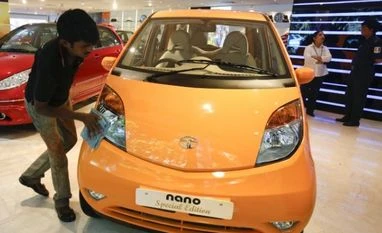
Tata Nano car
Tata Nano car
Avishek Rakshit Kolkata
Last Updated : Aug 27 2017 | 12:03 AM IST

Don't want to miss the best from Business Standard?

Despite the drag that the Nano has been for Tata Motors, the company is reluctant to shunt it. Instead, it plans to reposition the micro car as an electric one

“We cannot phase out this car. Sentiments of the company, Ratan Tata and shareholders are attached to it. We are looking at how it can be repositioned,” Satish B Borwankar, chief operating officer of Tata Motors, said on the sidelines of an event organised by the CII.

The Nano, which is produced at Tata Motors’ Sanand plant in Gujarat, shares the production line with Tigor and Tiago, the latest models from the company stable. Faced with tepid demand for the Nano and high demand for the other two cars, the company has been focusing on rolling out the latest models.

Borwankar said 1,000 Nano cars were sold every month on average, but sales in 2016-17 plummeted to 7,591. In June, Nano sales hit their lifetime low of 167, forcing Tata Motors to consider repositioning it. 

Sources said since the Nano debuted in the Indian market, it had been a drag on Tata Motors.

Tata Motors lost its hold in the passenger vehicles segment as Japanese, South Korean and European car makers started flooding the market. Tata Motors was pushed from third place to eighth in terms of sales.

“Recently we have managed to become the fifth largest in passenger vehicle sales and in the next couple of years we will again be the third largest,” Borwankar said.

As sales went into a decline, Tata Motors’ suppliers shifted to other car makers. The company has initiated steps to have adequate suppliers for the segment. Apart from this, company executives are meeting dealers individually to restore confidence. 

The strategy to get back into third place involves introducing new car models. It is also expected that after terminating its agreement with Volkswagen, Tata Motors will develop on its own the advanced modular platform that is designed to lower production costs.

“There is enough talent in the company and we need not appoint consultants,” Borwankar said about the future of the advanced modular platform, adding Tata Motors was not on the lookout for new partners for the project.

In early August, four months after signing an agreement, Tata Motors and Volkswagen called off their deal to jointly develop cars for emerging markets. Tata Motors and Škoda Auto (part of Volkswagen) conducted technical feasibility and commercial evaluation of a potential collaboration. Based on discussions, the companies concluded that the areas of the proposed partnership would not yield the desired synergies. 

One subscription. Two world-class reads.

Already subscribed? Log in

Subscribe to read the full story →
*Subscribe to Business Standard digital and get complimentary access to The New York Times

Smart Quarterly

₹900

3 Months

₹300/Month

SAVE 25%

Smart Essential

₹2,700

1 Year

₹225/Month

SAVE 46%
*Complimentary New York Times access for the 2nd year will be given after 12 months

Super Saver

₹3,900

2 Years

₹162/Month

Subscribe

Renews automatically, cancel anytime

Here’s what’s included in our digital subscription plans

Exclusive premium stories online

  • Over 30 premium stories daily, handpicked by our editors

Complimentary Access to The New York Times

  • News, Games, Cooking, Audio, Wirecutter & The Athletic

Business Standard Epaper

  • Digital replica of our daily newspaper — with options to read, save, and share

Curated Newsletters

  • Insights on markets, finance, politics, tech, and more delivered to your inbox

Market Analysis & Investment Insights

  • In-depth market analysis & insights with access to The Smart Investor

Archives

  • Repository of articles and publications dating back to 1997

Ad-free Reading

  • Uninterrupted reading experience with no advertisements

Seamless Access Across All Devices

  • Access Business Standard across devices — mobile, tablet, or PC, via web or app

Next Story



