Tata Steel-ThyssenKrupp deal: Koushik Chatterjee outlines importance of JV

The joint venture will be run on the principle of one company, one cash flow and one balance sheet, says Tata Steel Executive Director and CFO Koushik Chatterjee
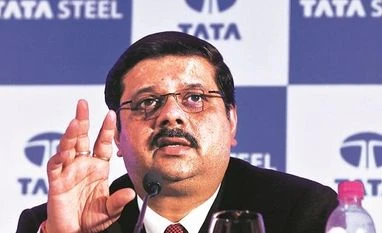
tata steel cfo, koushik chatterjee, executive director
Tata Steel Executive Director and Chief Financial Officer Koushik Chatterjee.
Ishita Ayan Dutt
Last Updated : Jul 02 2018 | 7:02 AM IST
Tata Steel Executive Director and Chief Financial Officer Koushik Chatterjee outlines the importance of the deal to Ishita Ayan Dutt. Excerpts: 

What will be the impact of the JV with ThyssenKrupp on Tata Steel’s balance sheet?

Strategically, this is an important JV for Tata Steel and we are committed for the long term. Having said that, financially, once the JV is formed and post completion of accounts adjustments, we will deconsolidate the European business from Tata Steel balance sheet. One of the most important impact will be the structural deleveraging that will be achieved in Tata Steel when about Euro 2.5 billion of debt will be transferred to the new company’s balance sheet without any recourse to Tata Steel. The earnings of the JV will be accounted for on equity basis and we expect robust levels of financial performance.


What kind of capex is envisaged by the JV in the near term? How much of it would be on the Tata Steel side?

Once the JV is formed, there is no Tata Steel side or ThyssenKrupp side. The JV will be run on the principle of one company, one cash flow and one balance sheet. There is a capex plan that has been captured in the joint business plan prepared by the clean team of both firms. There are currently some capex programmes in all sites and the JV will determine its capital allocation principles in a manner that ensures greater accountability for capital deployed focusing on enhanced asset capability and reliability that results in generation of better returns.  

Would Tata Steel continue to hold 50% in this JV in the long term? What is the group’s outlook on Europe business?

As I mentioned, Tata Steel is committed to the JV and as shareholders will work hard towards its success. The JV has some unique capabilities and will be structurally resilient. We will work with our co-partners and the company to realise the strategic vision of both shareholders.


What is the reason behind the slowdown in Tata Steel Europe’s performance and when do you see an upside?

In the last two quarters, we have had some one off operational issues in both the Netherlands and the UK. These have been addressed and we expect that both the physical and financial performance of the business will improve in the near future.

What are the lessons learnt from Corus integration and how would it implemented to make the JV work?

The context of an acquisition and the JV is very different and I don’t think the same is comparable. There was no possibility of proximate integration between Corus and Tata Steel, as we were in two different geographies and were serving different markets. Our integration then was more in terms of best practice sharing, common approach on performance improvement, having similar standards of governance, etc. In this JV, given the proximity of the hubs in the same geography, serving the same markets, similar cost structure, etc, the integration philosophy to drive a one company, one cash flow approach is not only relevant but a necessity. Hence, our post merger integration strategy will focus on making this into one seamless company.

Would this JV help Tata Steel focus on growth opportunities in India?

Tata Steel’s India plan has already been made known earlier by our chairman. We are at a very interesting point in time. With the underlying commodity cycle globally being stable coupled with the fact that the India growth story is expected to provide enough tailwinds in the near future, steel demand will continue to grow and our strategic aim is to grow along with the market. Hence, we are following a combined strategy to pursue organic and inorganic growth in India with the expansions in Kalinganagar and pursuing the acquisitive strategy opportunity provided by the Insolvency and Bankruptcy Code process.


Bhushan Steel was expensive. Bhushan Power & Steel may also come your way. How would it be funded?

I would not agree with you on Bhushan Steel simply because if you compare the capital cost, time and uncertainty associated with the alternative of building a greenfield steel plant, coupled with the asset quality and downstream capability of Bhushan Steel and on top of that also add the proximate synergies with Tata Steel, the acquisition comes with a very attractive proposition and price. We have also funded the acquisition with a very prudent system capital structure with Rs 180 billion of equity and Rs 165 billion of debt. Incrementally, the external debt to Ebidta in the next 18-24 months will not be more than 3x, which is in a comfortable range. I can’t comment on Bhushan Power, as it is in the courts.

Tata Steel is still exploring assets in India like Usha Martin, is it stretching itself too thin?

Given our strong brand presence and the growth in the construction and auto segments, we do look at proposals in long products but we don’t have any firm proposals on the table. I cant comment on any specific names. All that I would say is we look at the assets, the product quality, the synergies and the value that we can bring to the table, the transaction structure, earnings capability etc and then take it to our Board for its consideration. Only if we believe we can create value to financially justify the acquisition, we will progress.


Can you explain the purpose of the novation agreement in the Bhushan deal and how would the accounting be done once balance-sheets are consolidated?

The fair value of the bid that was accepted by the Committee of creditors and the NCLT was lower than the gross outstanding debt of Bhushan Steel. The differential debt was bought over by our SPV Bamnipal Steel from the lenders through novation and for a consideration. Therefore, the lender on record for that part of the gross debt of Bhushan Steel is Bamnipal Steel. On consolidation in Tata Steel, all inter company debt will be eliminated and only the net outstanding to the external lenders will be reflected in the consolidated Balance Sheet.

Will the write-back of Rs 200 billion attract MAT?

There is no write back of any loan contemplated at this stage.

One subscription. Two world-class reads.

Already subscribed? Log in

Subscribe to read the full story →
*Subscribe to Business Standard digital and get complimentary access to The New York Times

Smart Quarterly

₹900

3 Months

₹300/Month

SAVE 25%

Smart Essential

₹2,700

1 Year

₹225/Month

SAVE 46%
*Complimentary New York Times access for the 2nd year will be given after 12 months

Super Saver

₹3,900

2 Years

₹162/Month

Subscribe

Renews automatically, cancel anytime

Here’s what’s included in our digital subscription plans

Exclusive premium stories online

  • Over 30 premium stories daily, handpicked by our editors

Complimentary Access to The New York Times

  • News, Games, Cooking, Audio, Wirecutter & The Athletic

Business Standard Epaper

  • Digital replica of our daily newspaper — with options to read, save, and share

Curated Newsletters

  • Insights on markets, finance, politics, tech, and more delivered to your inbox

Market Analysis & Investment Insights

  • In-depth market analysis & insights with access to The Smart Investor

Archives

  • Repository of articles and publications dating back to 1997

Ad-free Reading

  • Uninterrupted reading experience with no advertisements

Seamless Access Across All Devices

  • Access Business Standard across devices — mobile, tablet, or PC, via web or app

Next Story


