Hyundai Motor India, the second-largest carmaker in the domestic market, recently hit eight million units in cumulative production since entering the country. Along with North America and Europe, India will be classified as a regional headquarters. Managing Director and Chief Executive Officer Y K KOO talks to Ajay Modi about the current market situation and the company’s plans. Edited excerpts:
How significant is Hyundai Motor Company’s (HMC) decision to make India a regional headquarters?
HMC is establishing three regional headquarters—North America, Europe and India, which will get more power to take swifter decisions. Each regional headquarters will also have divisions for planning, finance, products and customer experience, so that it can secure and optimise decision-making systems within each region.
We keep hearing about slowing retail demand. How are market conditions?
The overall market has grown; it is not too bad. But if you remove the brand new launches from volume, there is hardly any growth.
Retail is slow compared to wholesale. We are still selling according to plans. Some companies, including us, managed to increase prices recently and some decided against an increase.
How do you plan to meet demand without setting up another unit?
We will increase capacity by 50,000 units from January 2019, taking total capacity to 750,000 units. We will produce about 700,000 units this year. We can manage domestic and export demand with this capacity. We will next evaluate the situation after 2020.
The market leader here is growing its share beyond 50 per cent. Are you fine with a lower market share?
It is not a desirable situation for the market. Hyundai is not just a volume-oriented player. We are leading in the customer and dealer satisfaction index. We are very strong as number two and our average realisation per car is over Rs 700,000. Market share and volume are important, but most important is brand and customer perception. If you keep talking about volume, volume and volume for how long that can go on?
Have your electric vehicle plans received a setback as no policy has been announced and the government is not willing to subsidise buyers?
We are bringing an electric SUV in 2019, imported in completely knocked-down form. But nobody is making profits in electric vehicles. These are investments for the future. India is ever polluted and needs zero-emission vehicles, besides hybrid.
However, we cannot start local manufacturing before we have a sizeable market and infrastructure. The GST of 12 per cent is high and should be reduced to five per cent, and existing incentives should be maintained in the next FAME (Faster Adoption and Manufacturing of (Hybrid &) Electric Vehicles in India) scheme for vehicles that can run 200 -300km in a single charge.
Investments are high and so, some support will motivate companies to launch such products. I do not intend to make profits, but at least help me minimise the loss.
Will you keep expanding the network size or is the current network enough for these volumes?
Our volume is almost stable. With these kind of volumes, we do not want to expand the network much. The existing dealer partners should make more money. Too much network is not good for them. We may, however, need a bigger presence in rural markets.
What will be the focus for the next decade as more companies enter?
The Indian market is very tough. In the last twenty years, we know who has succeeded and who has not. We came to India with GM, Ford, Honda and Toyota in the 90s. We want to remain a market leader and a trusted brand. We will strengthen our position and grow sustainably and responsibly.

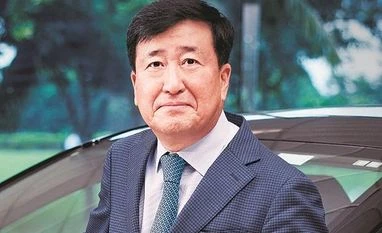 "Cannot make electric vehicles in India yet: Hyundai Motor CEO & MD Y K Koo")











