Zomato is serving its pricey IPO at the time of a cold tech war in India

The final shape of the country's emerging digital economy is still unclear, writes Andy Mukherjee.
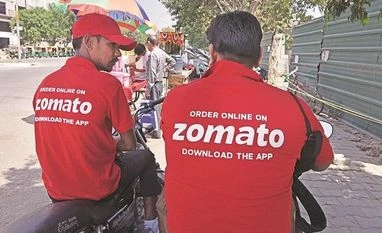
zomato, zomato delivery partners
Zomato’s pricey offering has arrived hot, beating other Indian unicorns. (File photo)
Andy Mukherjee | Bloomberg Opinion Zomato is serving a hot IPO.
5 min read Last Updated : Jul 13 2021 | 10:10 PM IST
India’s current rate of spawning unicorns, or startups with at least a billion dollars in valuation, is almost three per month. But all that action is in private markets; practically nothing of the digital economy trades publicly. Which explains the nervous excitement over this week’s initial public offering by one of the country’s two dominant online food-delivery services. 

As China cracks down on data-heavy businesses from finance to ride-hailing, Zomato Ltd., backed by Jack Ma’s Ant Group Co., is beefing up its IPO in the Indian market to Rs 93.75 billion ($1.3 billion) because of high demand.

At the top of the indicated price range, the app will have a market value of almost $8 billion, or 45% more than Jubilant Foodworks Ltd., which owns the South Asia franchise of Domino’s Pizza Inc. While Jubilant packs roughly a quarter of its revenue into earnings before interest, tax, depreciation and amortization, Zomato’s operations regularly bleed cash.

Naysayers may worry about paying so much for an unprofitable business. To the optimists, though, the losses at Zomato are reminiscent of Meituan’s decade-long journey to dominance. China’s third-largest publicly traded tech firm had started out as a Groupon clone, offering deals and discounts. It later added layers of Uber Eats-type online food delivery and Yelp-style restaurant reviews to become an all-purpose platform for services: a super-app. Zomato, which acquired Uber Eats’ India business before the pandemic--giving the U.S. ride-hailing firm a near-10% stake in return--is obviously looking to borrow from Meituan’s playbook. 


But is it too late for that? Enterprises like Ant, Alibaba Group Holding Ltd. and Didi Global Inc., built around large-scale processing of consumer data, are suddenly under a regulatory cloud in Beijing. Meituan is also facing a monopoly probe. What’s the risk that New Delhi, too, will go the same way, upsetting calculations that India’s smartphone revolution would offer investors a refuge from the U.S.-China tech cold war? 

Worrying signs are already evident. From Amazon.com Inc. to Facebook Inc.’s WhatsApp and Twitter Inc., Western tech firms are finding it hard to keep the market of 1.4 billion consumers open and attractive. New Delhi has weaponized its information technology and consumer protection legislation to target them. A law on personal data protection, and another on use of non-personal information, may be up next. That could be important for Zomato.

Compliance costs for handling online data are bound to rise. Even offline business practices could come under greater scrutiny. A restaurant association has asked India’s competition regulator to probe Zomato and rival Swiggy for allegedly charging exorbitant commissions and coaxing dining venues to offer discounts to maintain listings on their apps. Earlier this year, a restaurateur took to Twitter to complain about Zomato’s policy to punish food joints for cancellation of orders. Amid high unemployment, it’s possible that the government will want to push the cost of gig-economy workers’ social security to platforms that don’t directly employ them. (Zomato had nearly 170,000 delivery partners in March.)

The final shape of the country’s emerging digital economy is still unclear. Odds are that two or three large super-app contenders will emerge. One may be powered by Mukesh Ambani, India’s richest man, in partnership with Facebook and Alphabet Inc.’s Google. The other hopeful may be the Tata Group, a conglomerate that sells everything from Tetley tea to Jaguar Land Rover cars. For Zomato to place itself in the third place, it has to find partners to expand beyond food and health supplements into other services, such as payments and finance. Indonesia’s GoTo, the recently announced combination of e-commerce website PT Tokopedia with ride-hailing and delivery firm Gojek, offers a convincing model. 

The timing for the share sale is opportunistic. After an initial wobble, Zomato proved its utility during the pandemic, when diners were stuck at home. At the same time, extraordinary liquidity support from the central bank has the equity market awash in cash. Info Edge India Ltd., the largest investor, will get a handsome partial exit as a reward for writing the fledgling firm a $1 million check in 2010.


What matters now is a path to profitability. At $137 million, the operational cash burn last financial year was less than half the annual rate just before Covid-19, and more than covered by private investors. From here on, though, the heavy lifting will have to be done by public shareholders. They would like to see Zomato pull off smart acquisitions that bring in both scale and cash flows. Dominance of consumer data alone won’t build a sustainable moat, as China’s harsh regulatory action has amply shown.

To its credit, Zomato’s pricey meal has arrived hot, beating other Indian unicorns. For sheer fear of missing out, investors have to dig in. For the less intrepid, there’s always Domino’s pizza.

One subscription. Two world-class reads.

Already subscribed? Log in

Subscribe to read the full story →
*Subscribe to Business Standard digital and get complimentary access to The New York Times

Smart Quarterly

₹900

3 Months

₹300/Month

SAVE 25%

Smart Essential

₹2,700

1 Year

₹225/Month

SAVE 46%
*Complimentary New York Times access for the 2nd year will be given after 12 months

Super Saver

₹3,900

2 Years

₹162/Month

Subscribe

Renews automatically, cancel anytime

Here’s what’s included in our digital subscription plans

Exclusive premium stories online

  • Over 30 premium stories daily, handpicked by our editors

Complimentary Access to The New York Times

  • News, Games, Cooking, Audio, Wirecutter & The Athletic

Business Standard Epaper

  • Digital replica of our daily newspaper — with options to read, save, and share

Curated Newsletters

  • Insights on markets, finance, politics, tech, and more delivered to your inbox

Market Analysis & Investment Insights

  • In-depth market analysis & insights with access to The Smart Investor

Archives

  • Repository of articles and publications dating back to 1997

Ad-free Reading

  • Uninterrupted reading experience with no advertisements

Seamless Access Across All Devices

  • Access Business Standard across devices — mobile, tablet, or PC, via web or app

Topics :ZomatoIPOsJubilant Foodwork

Next Story


