
Ban on public events can curb Covid transmission rate by 24%: Lancet study
Customers can book the model at their nearest Ducati dealerships, and the deliveries will begin in the first week of November, it added
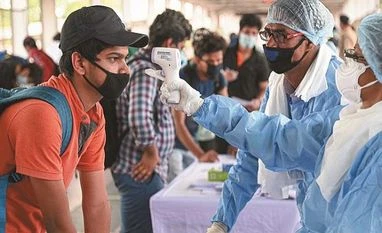 "Ban on public events can curb Covid transmission rate by 24%: Lancet study")
WebinarsNew
Deep DiveNew
Explore Business Standard
Customers can book the model at their nearest Ducati dealerships, and the deliveries will begin in the first week of November, it added
Ban on public events can bring down the COVID-19 reproduction number (R) number -- a key measure of virus transmission -- by 24 per cent in less than a month, according to a modelling study published in The Lancet journal.
An R value above 1 indicates a growing outbreak, whereas an R value below 1 indicates a shrinking outbreak.
The research using data from 131 countries suggests that individual measures, including closure of schools and workplaces, ban on public events and gatherings of more than ten people, requirements to stay at home, and internal movement limits, are associated with a reduction in transmission of SARS-CoV-2.
However, combined measures are more effective at reducing transmission, the researchers said.
"We found that combining different measures showed the greatest effect on reducing the transmission of COVID-19. As we experience a resurgence of the virus, policymakers will need to consider combinations of measures to reduce the R number," said Professor Harish Nair from the University of Edinburgh, UK.
"Our study can inform decisions on which measures to introduce or lift, and when to expect to see their effects, but this will also depend on the local context -- the R number at any given time, the local healthcare capacity, and the social and economic impact of measures," Nair said.
When looking at the measures individually, a ban on public events was associated with the greatest reduction in R -- 24 per cent reduction after 28 days -- which the researchers suggest may be because they are likely to prevent super spreader events and it was often the first measure to be introduced in countries.
The measures most strongly associated with an increase in R were lifting bans on gatherings of more than ten people and re-opening of schools, according to the researchers.
Although reopening schools was associated with a 24 per cent increase in the R by day 28, the researchers caution that they were unable to account for different precautions some countries implemented for reopening schools, for example limiting class sizes, distancing measure, routine deep cleaning, personal handwashing, face masks, and thermal temperature checks on arrival.
They said these are essential for safer school reopening and should be taken into account when interpreting this finding.
"We found an increase in R after reopening schools but is not clear whether the increase is attributable to specific age groups, where there may be substantial differences in adherence to social distancing measures within and outside classrooms," Nair added.
"Furthermore, more data are needed to understand the specific role of schools in increased SARS-CoV-2 transmission through robust contact tracing," he said.
The study, however, does not account for other potentially influential factors that have an impact on R -- including, among other things, compliance with the interventions, changes in population behaviour, sub-national differences in R, or the effects of contact tracing and isolation all of which vary by context.
Using the R number as a proxy for transmission also has limitations, as it is difficult to estimate accurately, particularly when prevalence is low, the researchers said.
In this modelling study, data on daily country-level estimates of R were linked with data on what measures those countries had in place from January 1, 2020 to July 20, 2020.
The timeline of each country was divided into individual phases when all measures remained the same in that country.
The analysis included 790 phases from 131 countries and the authors used a model to measure the association between which measures were in place and changes in the R.
(Only the headline and picture of this report may have been reworked by the Business Standard staff; the rest of the content is auto-generated from a syndicated feed.)
First Published: Oct 26 2020 | 7:50 PM IST


 Connect with us on WhatsApp