
China prepares for return of lunar spacecraft with rock samples from Moon
Chinese ground crews are standing by for the return of a lunar probe bringing back the first fresh samples of rock and debris from the moon in more than 45 years
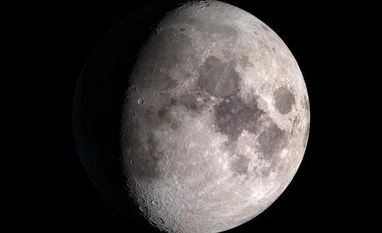 "China prepares for return of lunar spacecraft with rock samples from Moon")
WebinarsNew
Deep DiveNew
Explore Business Standard
Chinese ground crews are standing by for the return of a lunar probe bringing back the first fresh samples of rock and debris from the moon in more than 45 years
Chinese ground crews are standing by for the return of a lunar probe bringing back the first fresh samples of rock and debris from the moon in more than 45 years.
The Chang'e probe is expected to land in the Siziwang district of the vast Inner Mongolia region late Wednesday or early Thursday. It fired its engines early Wednesday to put it on course before the orbiter separates from the return vehicle, with all systems functioning as expected, the China National Space Administration said.
Recovery of the return vehicle will be complicated by its small size, darkness and heavy snow, state media reported. Plans call for it to perform an initial bounce off the Earth's atmosphere to reduce its speed before passing through and floating down on parachutes, making it difficult to precisely calculate where it will land, the official Xinhua News Agency quoted Bian Hancheng, a leader of the recovery crew, as saying.
State broadcaster CCTV showed four military helicopters standing by Wednesday morning at a base on the snow-covered grasslands. Crews in vehicles on the ground will also seek to hone in on signals. While sprawling in size, the area is relatively familiar because of its use as a landing site for China's Shenzhou crewed spaceships.
Chang'e 5 set down on the moon on Dec. 1 and collected about 2 kilograms (4.4 pounds) of samples by scooping them from the surface, and by drilling 2 meters (about 6 feet) into the moon's crust. The samples were deposited in a sealed container that was carried back to the return module by an ascent vehicle.
Flying a Chinese flag, the lander ceased functioning soon after it was used as a launching pad for the ascender, which was ejected from the orbiter after transferring the samples and came to rest on the moon's surface.
The spacecraft's return will mark the first time scientists have obtained fresh samples of lunar rocks since the former Soviet Union's Luna 24 robot probe in 1976.
Chang'e 5 blasted off from a launch base in China's southern island province of Hainan on November 23 on a mission expected to last 23 days.
It marks China's third successful lunar landing but the only one to lift off again from the moon. Its predecessor, Chang'e 4, became the first probe to land on the moon's little-explored far side and continues to send back data on conditions that could affect a future extended stay by humans on the moon.
The moon has been a particular focus of the Chinese space program, which says it plans to land humans there and possibly construct a permanent base. No timeline or other details have been announced.
China also has joined the effort to explore Mars. In July, it launched the Tianwen 1 probe, which was carrying a lander and a robot rover to search for water.
China's space program has proceeded more cautiously than the U.S.-Soviet space race of the 1960s, which was marked by fatalities and launch failures.
In 2003, China became the third country to send an astronaut into orbit on its own after the Soviet Union and the United States.
The latest flight includes collaboration with the European Space Agency, which is helping to monitor the mission. Amid concerns over the Chinese space program's secrecy and close military connections, the U.S. forbids cooperation between NASA and the CNSA unless Congress gives its approval.
That has prevented China from taking part in the International Space Station, something it has sought to compensate for with the launching of an experimental space station and plans to complete a permanent orbiting outpost within the next two years.
The rocks and debris brought back by Chang'e 5 are thought to be billions of years younger than those obtained by the U.S. and former Soviet Union, offering new insights into the history of the moon and other bodies in the solar system.
They come from a part of the moon known as the Oceanus Procellarum, or Ocean of Storms, near a site called the Mons Rumker that was believed to have been volcanic in ancient times.
As with the 382 kilograms (842 pounds) of lunar samples brought back by U.S. astronauts from 1969 to 1972, they will be analyzed for age and composition and likely shared with other countries.
(Only the headline and picture of this report may have been reworked by the Business Standard staff; the rest of the content is auto-generated from a syndicated feed.)
First Published: Dec 16 2020 | 1:12 PM IST


 Connect with us on WhatsApp