
Covaxin demand, acceptability grows among Indians after efficacy results
A major boost to the vaccine's acceptability came after Prime Minister Narendra Modi received the first dose of the vaccine earlier this month
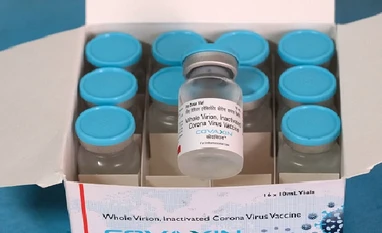 "Covaxin demand, acceptability grows among Indians after efficacy results")
WebinarsNew
Deep DiveNew
Explore Business Standard
A major boost to the vaccine's acceptability came after Prime Minister Narendra Modi received the first dose of the vaccine earlier this month
As India's vaccination drive against Covid-19 gathers momentum, the clouds of initial hesitancy about receiving Covaxin, developed by Hyderabad-based Bharat Biotech, has now cleared, raising demand and acceptability of the country's first indigenous vaccine against the disease.
While a major boost to the vaccine's acceptability came after Prime Minister Narendra Modi received the first dose of the vaccine earlier this month, the publication of efficacy results gave the vaccine another shot in the arm.
According to Neha Gupta, infectious disease specialist at Medanta -- The Medicity Gurugram, the Prime Minister getting his vaccination done is an "assurance and inspiration" for the general public.
"There has been an increase in demand for Covaxin," she said, adding that Covishield is also accepted and "can be used in immunocompromised individuals as well".
Covishield is a counterpart of AstraZeneca/Oxford university developed Covid-19 vaccine, currently manufactured in India by the Pune-based Serum Institute of India (SII).
Bharat Biotech had earlier this month announced the first interim analysis of Covaxin, which showed the efficacy of the Covid-19 vaccine to be at 81 per cent in its Phase-3 clinical trials.
The trials involved 25,800 subjects, the largest ever conducted in India, in partnership with the Indian Council of Medical Research (ICMR).
Interim efficacy results of the Phase-2 trials published in the journal The Lancet showed that Covaxin is "safe, immunogenic with no serious side effects."
These results have reduced the hesitancy to receive the vaccine among people which arose when the vaccine was first approved for emergency use in the country before the company made phase-3 efficacy results public.
Covishield showed an efficacy of 70.4 per cent on average when its two doses are taken 4 weeks apart.
However, this efficacy reportedly increases to nearly 79 per cent if the second dose is administered at 12 weeks or longer.
"People today do not doubt the efficacy of both the vaccines - Covaxin and Covishield. They are not making a difference between the two vacines," said Rahul Bhargava, Cancer Expert, Director, Department of Clinical Hematology & Bone Marrow Transplant, Fortis Memorial Research Institute, Gurugram.
"More people are today asking doctors whether they should get vaccinated against Covid-19. Overall, there is more eagerness to get vaccinated after the Phase-2 trials started," he said.
India is giving away millions of doses of Covid-19 vaccines to other countries.
The country has administered over 2 crore vaccine doses so far.
(Only the headline and picture of this report may have been reworked by the Business Standard staff; the rest of the content is auto-generated from a syndicated feed.)
First Published: Mar 09 2021 | 7:09 PM IST


 Connect with us on WhatsApp