
Covaxin phase 2 data shows safety, induces immune response: Lancet Study
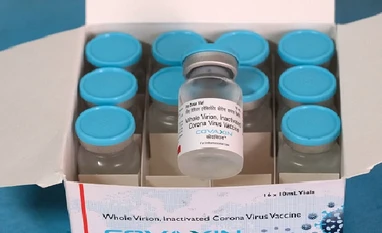
Covaxin is India's first indigenous vaccine against Covid-19
 "Covaxin phase 2 data shows safety, induces immune response: Lancet Study")
WebinarsNew
Deep DiveNew
Explore Business Standard
Covaxin is India's first indigenous vaccine against Covid-19
India's first indigenous vaccine against COVID-19, Covaxin, is safe and generates immune response without any serious side effects, according to the interim results of the phase 2 trials published in The Lancet Infectious Diseases journal.
The authors of the study noted that the phase 2 results did not asses the efficacy of the vaccine codenamed BBV152.
Developed by Bharat Biotech in collaboration with the Indian Council of Medical Research (ICMR) and the National Institute of Virology (NIV), Pune, the vaccine has been granted emergency use authorisation in clinical trial mode by the Indian government.
Covaxin had initially raised concerns among experts over its emergency approval by India's drug regulator.
The latest study comes a week after Bharat Biotech announced that the vaccine has shown 81 per cent efficacy in the third phase of clinical trials, the results of which are yet to be published.
The phase 2 trial to evaluate the immunogenicity and safety of BBV152 vaccine was conducted in healthy adults and adolescents aged 12-65 years at nine hospitals across nine states in India.
Two intramuscular doses of vaccine were administered on day 0 and day 28.
The primary outcome was assessed in all participants who had received both doses of the vaccine. Safety was assessed in participants who received at least one dose of the vaccine.
Between September 5 and 12, last year, 921 potential participants were screened, 380 of whom were enrolled.
"We report interim findings of the phase 2 trial on the immunogenicity and safety of BBV152, with the first dose administered on day 0 and the second dose on day 28," the authors of the study said.
In the phase 1 trial, published in the same journal last month, BBV152 induced high neutralising antibody responses that remained elevated in all participants three months after the second vaccination.
In the phase 2 trial, BBV152 showed better reactogenicity and safety outcomes, and enhanced humoral and cell-mediated immune responses -- two main mechanisms within the adaptive immune system -- compared with the phase 1 trial.
Adaptive immunity occurs after exposure to an antigen either from a pathogen or a vaccination.
Reactogenicity refers to the property of a vaccine of being able to produce common, adverse reactions, especially excessive immunological responses and associated signs and symptoms, including fever and sore arm at the injection site.
Covaxin is an inactivated vaccine developed by chemically treating novel coronavirus samples to make them incapable of reproduction.
This process leaves the viral proteins, including the spike protein of the coronavirus, which it uses to enter the human cells, intact.
Given as two doses, three weeks apart, the viral proteins in the vaccine activate the immune system and prepare people for future infections with the actual infectious virus.
"The results reported in this study do not permit efficacy assessments. The evaluation of safety outcomes requires extensive phase 3 clinical trials," the authors of the Lancet study said.
"We were unable to assess other immune responses in convalescent serum samples due to the low quantity," they said.
Even though direct comparisons between the phase 1 and 2 trials cannot be made, the reactogenicity assessments reported in this study were substantially better in the phase 2 trial than the phase 1 trial and other trials with a placebo group, according to the authors.
Also, the proportion of participants reporting adverse events in the phase 2 trial were lower than in the phase 1 trial, they noted.
"This study enrolled a small number of participants aged 1218 years and 5565 years. Follow-on studies are required to establish immunogenicity in children and in those aged 65 years and older, the authors added.
(Only the headline and picture of this report may have been reworked by the Business Standard staff; the rest of the content is auto-generated from a syndicated feed.)
First Published: Mar 09 2021 | 5:03 PM IST


 Connect with us on WhatsApp