Home / India News / Delhi bans soaps, detergents not conforming to latest BIS parameters
Delhi bans soaps, detergents not conforming to latest BIS parameters
The Delhi government on Monday banned the sale, storage, transportation, and marketing of soaps and detergents not conforming to the latest BIS parameters to curb pollution in the Yamuna river
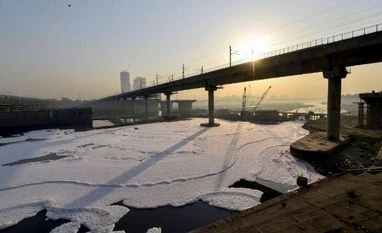
A view of the chemicals on the upper layer of Yamuna river.
The Delhi government on Monday banned the sale, storage, transportation, and marketing of soaps and detergents not conforming to the latest BIS parameters to curb pollution in the Yamuna river.
The National Green Tribunal (NGT) had in January accepted recommendations of the Yamuna Monitoring Committee (YMC) which had suggested directing the Delhi government to issue orders "prohibiting sale, storage and transportation and marketing of detergents which do not conform to the revised BIS standards".
The NGT had also directed to launch awareness campaigns about the harmful effect of using substandard soaps and detergents.
All the authorities concerned, including local bodies, civil supplies department and district administrations having control over shops and other establishments dealing with sale, storage, transportation and marketing facilities for soaps and detergents in Delhi should ensure the compliance of directions through strict vigil and surprise checks, the Delhi Pollution Control Committee (DPCC) said in an order issued on Monday.
The pollution body has asked the authorities concerned to submit monthly action taken reports of inspections conducted and subsequent action taken without fail.
Experts have cited soaps and detergents as one of the major reasons behind the pollution in the river.
Many times, visuals of toxic froth floating on the surface of the river in Delhi also make their way to social media.
The primary reason behind the formation of the toxic foam in the Yamuna is high phosphate content in the wastewater because of detergents used in dyeing industries, dhobi ghats and households, according to an official of the Central Pollution Control Board.
"A large number of unbranded detergents are also used in households and dyeing industries. The wastewater containing high phosphate content reach the river through untapped drains," he said.
These detergents and other organic matter get deposited in the riverbed when the river is flowing normally.
When water falls from a height on reaching a barrage, it leads to turbulence and churning which causes froth.
As per a DPCC report, against a discharge standard of 5 mg per litre for dissolved phosphates, their concentration in the Yamuna varies from 6.9 mg/l at Okhla to 13.42 mg/l at Khajoori Paltan (downstream of Najafgarh drain).
A comparison of the 2001 and 2002 Bureau of Indian Standards and those prescribed in 2020 show that Sodium Tripolyphosphates percentage for the household laundry detergents bars have been decreased from 9.5 (percentage by mass) to 5 for detergent bars, 2.5 for powder and to zero for household detergents for woollen and silk fabrics.
In its report submitted to the NGT, the YMC had also suggested that all the manufacturers of soaps and detergents be directed to disclose the ingredients present in the product and display the same on the package.
This is a matter which will only be effective if the Ministry of Consumer Affairs, under which the BIS functions, is directed to bring out a policy and notify not just standards but a mandatory requirement to declare the ingredients along with their proportion, it had said.
Soap making is not confined only to Delhi and even if efforts are made by the Delhi government, it will not have the intended effect on soap and detergent manufacturing in other states. Since the effluent joins the drains and the river in Delhi, the problem will continue, the committee had pointed out.
(Only the headline and picture of this report may have been reworked by the Business Standard staff; the rest of the content is auto-generated from a syndicated feed.)

 "Delhi bans soaps, detergents not conforming to latest BIS parameters")


 Connect with us on WhatsApp