India scores diplomatic coup as ICJ stays Jadhav execution
PM Narendra Modi expressed his satisfaction with verdict
Press Trust of India The Hague India scored a major diplomatic victory over Pakistan on Thursday as the International Court of Justice (ICJ) here stayed the execution of former Indian Navy officer Kulbhushan Jadhav.
The UN's highest judicial body also asked Pakistan to take "all measures" to ensure that Jadhav, sentenced to death by a Pakistani military court for alleged espionage, was not executed till the court had delivered its final verdict on the issue.
India welcomed the court's unanimous decision on Jadhav, 46, while Islamabad said it had informed the ICJ that it did not accept the court's jurisdiction in matters related to national security.
Prime Minister Narendra Modi expressed his satisfaction with the verdict and spoke to External Affairs Minister Sushma Swaraj who described the order as a "great relief". The two leaders thanked senior lawyer Harish Salve, who headed a battery of lawyers presenting India's case at The Hague.
ICJ President Ronny Abraham, a 63-year-old French academic and practitioner in public international law, asked Pakistan to keep the court informed "of all measures taken" in the implementation of the order.
The 15-member bench backed India's contention that there had been a violation of the Vienna Convention on Consular Relations as New Delhi's requests for consular access to its national had been denied 16 times.
The court, which had earlier provisionally stayed Jadhav's sentence on May 9, also noted that India and Pakistan were signatories to the Vienna Convention since 1977.
Jadhav would get a reprieve of at least 150 days since the sentence was announced, as Pakistan had indicated that the execution would "probably not take place" before August 2017.
"This means that there is a risk that an execution could take place at any moment thereafter, before the court has given its final decision in the case," the court said, and asked Pakistan to ensure that court's order be followed.
It said, "the mere fact that Mr Jadhav is under a death sentence and might therefore be executed is sufficient to demonstrate the existence of a risk of irreparable prejudice to the rights claimed by India."
The verdict came three days after the two countries gave their submissions during which India demanded the annulment of the sentence and described Pakistan's trial to convict Jadhav as "farcical". Pakistan, in turn, argued that Jadhav was a spy and India's plea was "misconceived".
Pakistan's Foreign Office spokesman Nafees Zakaria also hit out at India today, saying it was "trying to hide its real face" by taking the case to the ICJ.
"We do not accept the jurisdiction of the ICJ in matters related to the national security of the country," he was quoted as saying by a television channel.
India moved the ICJ against the death penalty on May 8. The next day, the global court stayed the sentence as a provisional measure.
Pakistan, which announced the sentence on Jadhav on April 10, claims its security forces arrested him from its restive Balochistan province on March 3 last year after he reportedly entered from Iran. However, India maintains that he was kidnapped from Iran where he had business interests after retiring from the Navy.
Jadhav's case is the latest flash-point in the tensions between Pakistan and India. The two countries last faced off at the ICJ 18 years ago when Islamabad sought its intervention over the shooting down of its naval aircraft.

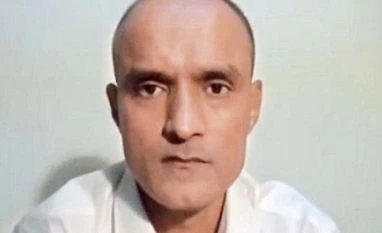 "India scores diplomatic coup as ICJ stays Jadhav execution")


 Connect with us on WhatsApp