Indian variant driving catastrophic second wave: Top WHO scientist

However, Soumya Swaminathan insisted that the variant alone is not the only factor. The country may have let down its guard down with 'huge social mixing and large gatherings,' she says

Soumya Swaminathan
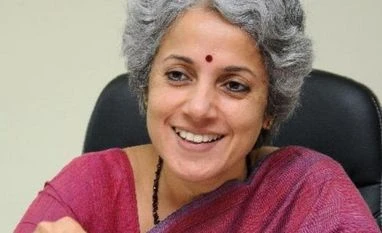
Soumya Swaminathan. Photo courtesy: @doctorsoumya
BS Web Team New Delhi
2 min read Last Updated : May 09 2021 | 4:46 PM IST
Rapidly spreading Indian variant of SARS-CoV-2 (B.1.617) could be accelerating India's devastating second wave of the pandemic, the World Health Organization's top scientist said on Sunday.

India reported over 4,000 fatalities from the deadly disease for the second consecutive day and over 403,738 new cases of Covid-19 in the last 24 hours.

In an interview to news agency AFP, Soumya Swaminathan warned that "the epidemiological features that we see in India today do indicate that it's an extremely rapidly spreading variant."

Swmaninathan also said that B 1.617 is a variant of concern as it has some mutations which increase transmission, that potentially could make it resistant to antibodies generated by vaccination or by natural infection.

However, she insisted that the variant alone may not be the reason for the alarming surge in cases and deaths seen in the country. Swaminathan hinted that the country may have let down its guard down, with "huge social mixing and large gatherings".

"In a large country like India, you could have transmission at low levels, which is what happened for many months. It was endemic (and) probably gradually increasing. Those early signs were missed until it reached the point at which it was taking off vertically," she said.

"At that point it's very hard to suppress, because it's then involving tens of thousands of people and it's multiplying at a rate at which it's very difficult to stop."

The second wave has been a catastrophe in every sense for the country with family members running from pillar-to-post to find ICU beds and oxygen cylinders. Hospitals have run out of basic medical supplies, and many patients died due to oxygen shortage. An ediorial from British journal Lancet warned that India could see a staggering 1 million deaths from the disease by August 1.

One subscription. Two world-class reads.

Already subscribed? Log in

Subscribe to read the full story →
*Subscribe to Business Standard digital and get complimentary access to The New York Times

Smart Quarterly

₹900

3 Months

₹300/Month

SAVE 25%

Smart Essential

₹2,700

1 Year

₹225/Month

SAVE 46%
*Complimentary New York Times access for the 2nd year will be given after 12 months

Super Saver

₹3,900

2 Years

₹162/Month

Subscribe

Renews automatically, cancel anytime

Here’s what’s included in our digital subscription plans

Exclusive premium stories online

  • Over 30 premium stories daily, handpicked by our editors

Complimentary Access to The New York Times

  • News, Games, Cooking, Audio, Wirecutter & The Athletic

Business Standard Epaper

  • Digital replica of our daily newspaper — with options to read, save, and share

Curated Newsletters

  • Insights on markets, finance, politics, tech, and more delivered to your inbox

Market Analysis & Investment Insights

  • In-depth market analysis & insights with access to The Smart Investor

Archives

  • Repository of articles and publications dating back to 1997

Ad-free Reading

  • Uninterrupted reading experience with no advertisements

Seamless Access Across All Devices

  • Access Business Standard across devices — mobile, tablet, or PC, via web or app

Topics :CoronavirusCoronavirus TestsCoronavirus Vaccine

Next Story




