Last week, a norm challenged by a 22-year-old law student resulted in the Supreme Court invoking the axiom “sun is the best disinfectant” as it turned its gaze inward to make the judiciary more transparent. A petition filed by Swapnil Tripathi, a final-year student studying for a BBA LLB at the National Law University, Jodhpur, and clubbed with a batch of pleas by a few others prompted the apex court to allow live streaming of the opaque proceedings within.
Tripathi, who hails from Kanpur and has a keen interest in constitutional law, wanted to challenge the denial of access to interns to Supreme Court proceedings on Mondays and Fridays, days marked for fresh filings. When he was interning with Supreme Court advocate Rishabh Sancheti during his third year of college, he felt that live streaming would give interns critical lessons in courtroom practices as well as make trials more transparent for litigants and the public at large.
“During the course of my internship, I worked on a lot of important matters which were listed on Mondays and Fridays. As interns we have plenty of theory in law schools but we can only see for ourselves the practical aspect of how arguments are made,” he says.
When he suggested to Sancheti that the existing rule was against the interest of interns, the advocate advised him to contest it since he felt so strongly about it. Last December, Tripathi filed a petition after thinking about the idea for a year.
Besides Tripathi, four other law students joined the cause with applications this year. The petitions included those filed by senior advocate Indira Jaising and an NGO, the Centre for Accountability and Systemic Change.
At times he couldn’t reach or had to rely on seniors to inform him about the progress in the courtroom. He also met people who travelled from across the country but were unaware of what transpired in cases involving them. “Live streaming allows people to see what happens when they can’t physically be present in courts. People won’t be misled, as sometimes even reporting can go wrong.”
The Bar Council of India requires interns to work with lawyers who practise in the Supreme Court and high courts. In his petition, Tripathi argued that the prohibition violated the fundamental right of learning for interns. “I understand courts are extremely crowded with lots of lawyers, and constrained. So one of my prayers was that if you are not allowing interns inside the court, get a live streaming room within the premises.” He also cited the example of the US, where the Supreme Court uploads the transcripts of all oral arguments of entire proceedings on its website.

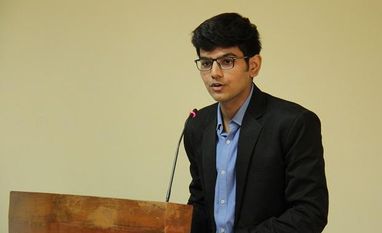 "Meet Swapnil Tripathi, the law student who made Supreme Court open up")












 Connect with us on WhatsApp