The Benegal Committee has given the Censor Board blanket powers: Pankaj Butalia
Interview with Documentary film maker
Nikita Puri Set up to revamp India's film censor board, the government-appointed Shyam Benegal Committee's report has met with mixed response from the film industry. Headed by Shyam Benegal, the panel, which includes film maker Rakeysh Omprakash Mehra, actor Kamal Haasan, ad guru Piyush Pandey and film journalist Bhawana Somaaya, has been applauded for its recommendation to curb censorship. While the move to check Central Board of Film Certification's snip-friendly attitude has been appreciated, the fact that the Board can invoke Section 5B(1) of the Cinematograph Act to ban films on wars and riots has not been received well. Documentary film maker
Pankaj Butalia speaks to
Nikita Puri about the Benegal Committee's report. Edited excerpts
What was your first reaction to the Benegal committee's recommendations? Almost 40 years ago, in a college seminar when Benegal had come to speak about censorship and controlling artistic works, I had asked him if film makers should also exercise restrain on their part. He said something that I really valued, he said, “You’ve allowed the censor board to sit in your head. Now they don’t need to do their jobs, you’ll do their jobs for them.”
I realised he was saying that you should have the freedom to express yourself without fear of sanction from society. If that freedom isn’t there, then you are always scared and then no new ideas can be generated. The fact remains that once you start shutting people up, it ultimately kills all creativity because everybody then kills a little bit of themselves to survive. I find it very ironical that Benegal, who had said this to me in 1977, is today saying something diametrically opposite. (Benegal has said that while he doesn’t believe in censoring films, one must keep social norms in mind).
The Benegal Committee has taken away the censor board’s scissors, isn’t that a good thing? Yes, they’ve taken away the power of CBFC to make cuts. This doesn’t seem harmful at all and may seem progressive, but from now on, you will have to apply for a particular category, and you will only be judged for that category and no other category. Till now, everything was applied for in the ‘U’ category. Then they’d decide whether the film could go for ‘U’, or ‘UA’ or ‘A’; they’d offer it to you, like they did for The Grand Budapest Hotel. It came in for a ‘U’ certification but they only got an ‘A’, that too after making cuts.
The scope of manipulation and negotiation has been increased because the film maker is now caught in a very strange place — either he applies for an ‘A’ straightaway or applies for a ‘U’ certification and gets rejected. In which case he can’t show it in most theatres; but a Shah Rukh Khan film won’t work if you don’t have unrestricted screening for the whole family.
According to the recommendations of the committee, CBFC can refuse certification only when a film contains anything that contravenes provisions of Section 5B (1). Does this aspect still leave films at CBFC’s mercy? There are now enough court rulings on how to read films starting right from the KA Abbas case (1970); there are at least 30 strong judgements by the Supreme Court which basically say the same thing — that you can attack the state, but you cannot restrict people’s opinions. The Supreme Court has specifically said that only when something is a call to violence, then it attracts restrictions.
So all the committee had to do was to say that you cannot apply 5B (1) without keeping in mind other points. They could have clarified terms like decency, immorality etc, and tied the hands of the Board saying you must show how something is indecent in the context of the whole film.
It’s not the film maker who spreads communal hatred, it’s the people the film maker is writing about. The film maker is like a messenger, like a TV reporter who is reporting something that has been said by somebody.
What the committee has actually done is that they’ve given the Censor Board blanket powers. And the best part is that they don’t have to explain themselves, the committee could have made it mandatory for the Board to put in an argument for not giving it a certificate. Now they can just dismiss it without having to explain why. Benegal has recently said that one can always go to courts if the film is rejected, but the whole purpose of having a committee was to reduce the need for people to keep running to court. So the next time my film is rejected, I’ll have to go to court to find out why it is anti-national and the argument will hit me for the first time while I am in the court. If this report is accepted, except for some of the completely benign Bollywood films, the rest of the films will be completely in the power of the Board.
Is there an aspect of film certification that still lies unaddressed? The very basis of film censorship lies in the fact that films are considered to be mass medium, and that raw emotions of cinema have the capacity to move you. Which film has moved people into action in the last 40-50 years? No film. But documentaries like mine are at most seen by 500 people at a time, if I am lucky. I’m thus already showing films to restricted audiences, why do you want me to have a censor certificate? Right now the ambiguity that remains is that there’s nothing in the censorship law that makes your wedding video film exempt from having a certificate and that makes me need one. If you make a corporate film on Maruti, it would also need a certificate but nobody will take you to task if you don’t have one. But if I make a film on Maruti to show exploitation of workers by companies, I will need a certificate.

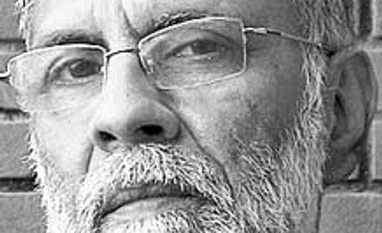 "The Benegal Committee has given the Censor Board blanket powers: Pankaj Butalia")


 Connect with us on WhatsApp