We have set up play spaces for children for some normalcy after quake turmoil: Shubha Murthi
Interview with international director (Asia), SOS Children's Villages International
Veenu Sandhu With over 6,000 rendered dead, many more presumed dead and even more homeless, earthquake-hit Nepal is facing an enormous humanitarian crisis. Besides the Indian government, non-governmental organisations are also engaged in helping the neighbouring country at this trying time.
Shubha Murthi, international director (Asia), SOS Children's Villages International, has been travelling in Nepal to mobilise resources to help the families affected by the devastating earthquake. She speaks to
Veenu Sandhu about the situation on the ground, the challenges that relief workers are facing and the arduous road to recovery. Edited excerpts:
There is the visible impact - the damaged buildings, people injured or living in the camps. And then there is the invisible impact, the picture that has not yet reached the world. What is the ground situation? The situation is very grim. What's worse is that many areas are still inaccessible. In the Kathmandu valley, people have been able to reach quickly with help. But in several other areas, relief teams have had to return halfway. There have been landslides after the earthquake and reaching these places is very difficult. Big chunks in the mainland are still out of reach. We don't know what has happened to people there. The whole country is mountainous. Relief workers are trying very hard to move in, but you go up a mountain and there is no way ahead. It is frustrating and there is an immense feeling of helplessness.
There are some places where help has started reaching only now. People have now been rescued from these areas that are accessible only by helicopter. But there are other areas - some five districts around the epicentre - that have suffered the most and where help is reaching in bits and pieces. Nobody knows really what's happening. And there are a lot of emotional stories.
What is SOS Children's Villages doing to help? SOS already has a presence in Nepal. We have set up relief camps and childcare spaces where, among other things, children can also play so that there is some semblance of normalcy for them in the midst of all the turmoil. [Murthi has been travelling across Sindhupalchok district, south of Kathmandu, where 90 per cent of the houses have collapsed.] Six childcare spaces are already operational in places like Karve, Pokhara, Bhaktapur and Kathmandu.
The 'mothers' (women who act as mothers for a lifetime to abandoned, orphaned or unaccompanied children) have been counselling the affected families. Boys and girls from the SOS youth clubs in Nepal have been reaching out to the families and visiting the camps to help and extend emotional support.
There is the matter of providing immediate relief - food, medical aid and shelter - but there also is the trauma. How are people dealing with that? Yes, there is the emotional impact. There is trauma, but people here are amazingly resilient. There is a lot of will power to overcome the situation.
In disasters such as these, children are often the worst impacted. How is SOS helping them? We are seeking to support unaccompanied children (children who might have been separated from or lost their families). As soon as an unaccompanied child is found, SOS co-workers bring him or her to the closest SOS facility. So far we have come across one or two unaccompanied children.
We are partnering with, among others, hospitals, the government, particularly the district authorities, the army and the local NGOs to trace and unify the children with their families.
As the situation improves, the children will also need to start going back to school. A lot of schools have been damaged. There are certain areas that probably had just one school and with that gone, a large number of children have been impacted. We are already in talks with the authorities to help with this.
So there will be immediate and long-term relief work? We are working on a three-pronged approach. The task of providing immediate relief could last from a couple of days to weeks. The next step will be providing a home-in-a-box. This involves providing the basic essentials to the families so that they can return to some kind of normal life. People's livelihoods will also have to be rebuilt and children will need to be counselled to deal with the trauma they have experienced.
There are families that have lost their homes completely. We are negotiating with the government to help rebuild their homes. We are committed to help and stand by at least a thousand families in 12 districts. We might not be able to offer permanent housing because of legal issues, but we can offer help and support in other ways.
All this will require strong financial support. Are people coming forward to help? There has been an outpouring of financial support internationally. Individuals, particularly from Germany, Europe, The Netherlands, Norway and France, to name a few countries, have been very generous with their support. People from India have also come forward to help.

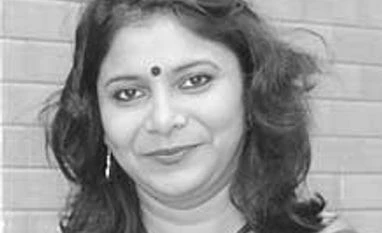 "We have set up play spaces for children for some normalcy after quake turmoil: Shubha Murthi")

