“I have been sitting in front of television sets since morning, and as I got to know that I will get back my land, I could not stop crying out of joy. I still remember each day of the struggle. We could not step out of our houses for days. I spent five nights in the police lock-up in 2006. Today, we won; justice has prevailed,” says Protima Das, who has two bighas inside the Tata Motors factory site.
The feelings run so deep for the people of Beraberi that issues like land usability and earning prospects in farming itself have taken a backseat. Large parcels of land tracts in the factory sites have been filled with fly ash, making it unviable for farming.
“We’ll make the land usable in 10 days. We waited for 10 years to get our land back. We are even willing to take land in other places, but it should be closer to our homes,” says Biswajit Kule, who owns one bigha land at the factory site. Others have even more innovative business propositions in mind. “We can make some extra money by selling the fly ash,” says Doot Kumar, a panchayat member at Beraberi village. While Beraberi is busy celebrating, in the nearby Rasulpur village, mostly populated by casual workers and farmers who willingly gave land for the Nano project, there are hardly any signs of festivities.
Ashok Ruidas, around 70, is in a state of disbelief. “I, too, will get back the land, is it?,” he smirks, as he poses the question to his son. He got around Rs 90,000 from the government as compensation for his land. For the past 10 years, Ruidas had been unemployed, after a brief tenure of employment as security guard at the Nano factory site. However, with the prospects of getting back the land, Ruidas plans to go back to farming.
Udayan Das, a doctor by profession and leader of the Singur Shipla Vikas Unnayan Samiti, who led the front for willing farmers in Singur too, is happy to get back his land. Das owned 13 acres at the Nano site in Singur.
Over the past 10 years, Singur has been divided into two camps: willing and unwilling farmers — those who accepted cheques for giving land to the government (around 600 acres) and those who refused to accept money for the land. With the Supreme Court’s ruling on Wednesday that the acquisition of land in Singur by the then Left Front government of West Bengal in 2006 for Tata Motors’ Nano car project was illegal, both willing and unwilling farmers will get back their lands. Hence, at Beraberi village, which is populated by unwilling farmers, willing farmers from the nearby villages are hard to be located.
“The government created the distinction between willing and unwilling farmers. We never wanted it. Also, the government was giving doles to unwilling farmers, which we did not get. But, we are happy with the solution. At the same time, I feel this will set a wrong precedence. People in West Bengal want jobs. The entire episode will send a wrong signal to the industrialists,” says Das. For the past few years, the West Bengal government has been giving 16 kg rice and Rs 2,000 per head in each family to unwilling farmers in Singur. The SC judgment seemed to have ironed out the long-drawn rift between the willing and unwilling farmers, as for the unwilling farmers, nothing matters over the prospect of getting back the land.
“We are neither jealous nor have anything against the willing farmers. We led a struggle, and like all struggles, a few sacrifice their lives whereas everyone enjoys the fruit,” says Chaitali Bhattacharya, who took active participation in the protest rallies at Singur in 2006. Then a teenager, and now a mother of two, Bhattacharya plans to go back to farming after a decade of survival on government doles.
As Singur celebrates, the government faces the intricate task of identifying land parcels of willing and unwilling farmers, and redistributing the same. “The primary thing is that we will get back our land. It is a secondary issue that how it will be redistribute. We will have to see how much land is totally unusable. We are also open to inviting industrialists, including Tatas, for setting up an industry in Singur. Mamata Banerjee is for both agriculture and industry,” says Rabindranath Bhattacharya, MLA, Singur.

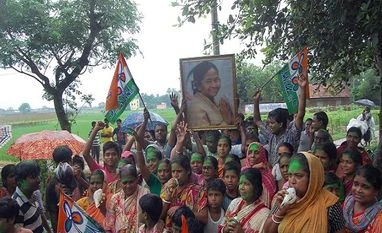 "Singur celebrates SC verdict on Nano land")


 Connect with us on WhatsApp