India's defence cost: High on personnel and low on modernisation

The most recent Indian budgetary figures put India's defence expenditure for FY20 at $59.7 bn which is less than SIPRI's estimates and actually puts India at 5th, behind both Russia and Saudi Arabia.

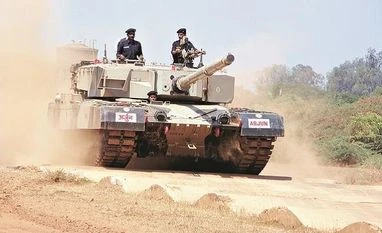
TANK, military, army, defence, budget, spending
Unsurprisingly, the heavy outgo on personnel costs results in India having the lowest percentage spend on equipment modernisation, that is, expenditure.
Ajai Shukla New Delhi
3 min read Last Updated : May 01 2020 | 12:53 AM IST
A well-respected Swedish think tank, which announced on Monday that India was now the world’s third-biggest military spender, appears to have overestimated India’s defence spend.
 
In making this determination, the Stockholm International Peace Research Institute (SIPRI) has put India’s defence spend for 2019 at $71.1 billion, behind top spender US ($732 billion) and China ($261 billion), but ahead of Russia ($65.1 billion) and Saudi Arabia ($61.9 billion).
 
However, the most recent Indian budgetary figures (revised estimates) put India’s defence expenditure for 2019-20 at Rs 4.5 trillion, or about $59.7 billion. This actually puts India at fifth, behind both Russia and Saudi Arabia.
 
It is unclear as to how SIPRI arrived at the $71.1 billion figure. The lower Indian budgetary figures include all aspects of defence spending, including salaries and defence pensions and civilian establishment of the ministry of defence (MoD), the Coast Guard, and Border Roads Organisation.

SIPRI is also incorrect in stating that India spends 2.7 per cent of its gross domestic product (GDP) on defence. The most recent figure for 2019-20 was 2.18 per cent of GDP.
 
However, a Business Standard analysis comparing Indian defence spending (2020-21 Budget figures) with five other countries — the US, China, Russia, the UK and Pakistan — shows interesting results.
 
India allocates, by far, the highest percentage of its Defence budget on personnel costs, with a hefty 59 per cent going to salaries and pensions. Even the US and the UK, which pay their soldiers relatively lavishly, spend only 38 per cent and 30.6 per cent, respectively, on personnel costs.
 
Unsurprisingly, the heavy outgo on personnel costs results in India having the lowest percentage spend on equipment modernisation, that is, expenditure.

While China and the UK spend 41 and 42 per cent of their Defence budgets on modernisation, and even Pakistan spends a healthy 37 per cent, India can spare no more than 25 per cent of its Defence budget on  capital expenditure.

Countries like the UK plan equipment modernisation for a 10-year window, identifying exactly what weapon platforms they need to replace and allocating the funding for procuring replacements.
In contrast, India’s 15-year Long Term Integrated Perspective Plan (LTIPP) is an endless wish list that the Budget cannot support, since there are no priorities identified, nor alignment of requirements with future budgetary means.
 
India is ahead only of Pakistan in the amount spent on each soldier a year — including salary, equipment and training costs. While the US spends over half a million dollars per soldier and the UK spends $367,000, India spends a mere $43,000 per individual. Consequently, the Indian military is a manpower-heavy throng that is poorly armed, equipped, and trained.

While China shows up well behind the US on almost every count, many Defence analysts argue that China’s expenditure figures are misleading. These figures use conventional currency conversion, without adjusting for purchasing power parity (PPP), even though China builds most of its equipment indigenously rather than buying them at dollar prices from the international market.
 
 Calculating from a PPP perspective, scholars such as Peter Robertson, professor at the University of Western Australia, put China’s real military spending, as an equivalent of US spending, at $455 billion — not far behind the actual US spending of $732 billion.
 

One subscription. Two world-class reads.

Already subscribed? Log in

Subscribe to read the full story →
*Subscribe to Business Standard digital and get complimentary access to The New York Times

Smart Quarterly

₹900

3 Months

₹300/Month

SAVE 25%

Smart Essential

₹2,700

1 Year

₹225/Month

SAVE 46%
*Complimentary New York Times access for the 2nd year will be given after 12 months

Super Saver

₹3,900

2 Years

₹162/Month

Subscribe

Renews automatically, cancel anytime

Here’s what’s included in our digital subscription plans

Exclusive premium stories online

  • Over 30 premium stories daily, handpicked by our editors

Complimentary Access to The New York Times

  • News, Games, Cooking, Audio, Wirecutter & The Athletic

Business Standard Epaper

  • Digital replica of our daily newspaper — with options to read, save, and share

Curated Newsletters

  • Insights on markets, finance, politics, tech, and more delivered to your inbox

Market Analysis & Investment Insights

  • In-depth market analysis & insights with access to The Smart Investor

Archives

  • Repository of articles and publications dating back to 1997

Ad-free Reading

  • Uninterrupted reading experience with no advertisements

Seamless Access Across All Devices

  • Access Business Standard across devices — mobile, tablet, or PC, via web or app

Topics :defence expenditureDefence budgetMilitary spendingBudget 2020GDP

Next Story