Bigger firms pass on surging input costs to consumers, smaller ones stuck

Smaller manufacturers are resorting to cuts in the wage bill to keep afloat, as the demand situation in the economy remains low
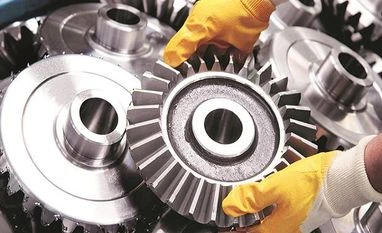
gear line, manufacturing, economy, growth, PMI
Indivjal Dhasmana New Delhi
6 min read Last Updated : Sep 02 2021 | 9:57 PM IST
While companies in India have been facing burgeoning input costs, only the bigger ones seem to be able to pass them on to consumers. This is so because the low demand situation is preventing medium and smaller ones from doing so, and is borne out by wholesale price index (WPI)-based data. 

WPI inflation eased to a three-month low in July, but was still at an elevated level of 11.16 per cent.

However, inflation in manufactured items rose to 11.20 per cent from 10.88 per cent in the previous month. It was in double digits for three consecutive months and stood at 9.44 per cent in April.

Products such as textiles, paper, chemicals, rubber, plastic, metals, food products, vegetable and animal oil and fats-- all manufactured items-- have seen a surge in inflation in recent times. Inflation in vegetable and animal oil and fats was as high as 42.89 per cent and peaked at a staggering 51.95 per cent in May.

Industries using these as inputs cried foul, as they were already reeling under the pressure of high diesel prices.

A commentary associated with IHS Markit purchasing managers' index (PMI) survey on Wednesday said Indian manufacturers signalled another a monthly rise in cost burdens, taking the current stretch of input inflation to 13 months. Cost pressures were linked by survey members to raw material scarcity and transportation problems. PMI manufacturing slid to 52.3 in August from 55.3 in July.

India Ratings said in a note that since fuel prices are a cost to almost all manufacturing sectors either directly or indirectly, higher fuel inflation raises the input costs across the board. In addition to fuel cost, the basic cost of the raw material, intermediate goods, and wages pushes the prices and, in turn, inflation of the manufactured products.

While medium, small and micro enterprises (MSMEs) find it difficult to pass these high input prices to their consumers-- be it higher-up industry or the retail consumers-- big industries are shifting the burden to the consumers. Also, smaller players are resorting to slashing wage bills.

SBI group chief economic advisor Soumya Kanti Ghosh says small companies with turnover of up to Rs 500 crore are continuously implementing cost-cutting measures including pruning the wage bill.

"While analysing results of more than 3,700 listed entities, we saw a reduction in employee cost by up to 5 per cent in companies with turnover of up to Rs 50 crore as compared to an increase in 2-3 per cent for large corporates in Q1FY22 over Q4FY21," Ghosh said.

Says Sunil Kumar Sinha, principal economist at India Ratings: "Two stories are playing out. Large organised sector manufacturers are not only increasing their footprint at the cost of marginalisation of MSME sector, but are also increasingly passing on rising input cost to the output cost."

He cites the Reserve Bank of India's (RBI's) latest industrial outlook survey, saying that it indicates that big companies are likely to continue this in the near term as demand normalises further.

The 94th round of survey showed that more companies expect profit margins to improve in the second quarter of the current financial year than perceived in the previous round. Respondents expect input cost pressure to continue in the third quarter, albeit with marginal easing, and selling prices to harden.

Sinha says on the other hand, MSME and unorganised firms are unable to pass on the input cost as much as they would like due to fear of losing the market.

"In fact, they are under so much duress that they are left with zero risk taking capacity. So, marginal players are trying to play safe but it is eroding their viability," he says.

Large organised manufacturing players do not face such predicament and are therefore willing to pass on the rising input costs to the consumers, he says.

Aditi Nayar, chief economist at Icra, says elevated input costs have created a conundrum at a time when the domestic demand recovery remains tentative.

"Some larger organised players have been able to pass on some price increases to protect their margins to an extent. However, smaller and less formal entities, which have been reeling from the disruption caused by the first and second covid waves, may not have the pricing power to follow suit," she points out.

In fact, industry chamber PHDCCI, which represents MSMEs, says hardening of WPI inflation in manufactured items is worrying as it is impacting the cost of production and reducing price-cost margin of the producers.

Sanjay Aggarwal, president of the chamber, says high prices of raw materials are posing a serious challenge to the small businesses to operate in the difficult pandemic times, which needs to be addressed immediately.

Barclays chief India economist Rahul Bajoria says in the last few months, higher imported commodity costs have reduced margins, and we have seen subdued passthrough from rising costs into consumer prices. As demand recovers, some margin normalisation cannot be ruled out.

Table: Inflationary trend in manufactured goods, January-July, 2021 (in %, YoY)
Month  January February March April May June July
Overall WPI inflation in manufactured goods
5.47 6.06 7.84 9.44 11.25 10.88 11.20
Textiles  5.76 6.84 9.17 10.00 11.55 13.91 15.59
Paper and paper products  3.08 4.49 8.55 10.12 9.77 10.30 10.68
Chemicals and chemical products  3.96 6.30 8.74 11.11 11.17 10.72 11.13
Rubber and plastic products 
7.40 7.78 11.27 13.89 12.85 12.35 12.30
Basic metals 
15.31 13.18 16.98 20.19 29.24 28.90 29.09
Mild steel -semi-finished steel 11.32 10.00 15.14 17.34 24.35 23.62 21.50
Fabricated metal products (except electrical machinery and eqpt) 3.91 5.32 5.64 6.79 12.15 10.98 13.59
Vegetable and animal oils and fats 
20.82 27.15 35.51 44.54 51.95  44.28 42.89 Food products  4.99 7.01 9.74 13.13 15.58 13.38 13.13

One subscription. Two world-class reads.

Already subscribed? Log in

Subscribe to read the full story →
*Subscribe to Business Standard digital and get complimentary access to The New York Times

Smart Quarterly

₹900

3 Months

₹300/Month

SAVE 25%

Smart Essential

₹2,700

1 Year

₹225/Month

SAVE 46%
*Complimentary New York Times access for the 2nd year will be given after 12 months

Super Saver

₹3,900

2 Years

₹162/Month

Subscribe

Renews automatically, cancel anytime

Here’s what’s included in our digital subscription plans

Exclusive premium stories online

  • Over 30 premium stories daily, handpicked by our editors

Complimentary Access to The New York Times

  • News, Games, Cooking, Audio, Wirecutter & The Athletic

Business Standard Epaper

  • Digital replica of our daily newspaper — with options to read, save, and share

Curated Newsletters

  • Insights on markets, finance, politics, tech, and more delivered to your inbox

Market Analysis & Investment Insights

  • In-depth market analysis & insights with access to The Smart Investor

Archives

  • Repository of articles and publications dating back to 1997

Ad-free Reading

  • Uninterrupted reading experience with no advertisements

Seamless Access Across All Devices

  • Access Business Standard across devices — mobile, tablet, or PC, via web or app

Topics :Manufacturing PMIServices PMIMSME sectorIndia IncIndia's manufacturing sectorFuel pricesPMI

Next Story



