The Union power ministry has an ambitious plan for 100 per cent smart metering over the next two years. However, not all state distribution companies (discoms) see a financial benefit from smart meters.
Also, vendors are reluctant to supply to some states, on payment concerns. “I don’t see a benefit to make that huge an investment, when the returns are not impressive. It does not do much to change my financials significantly,” said a top official from a state discom, who did not wish to be identified.
A smart meter has a modem (communication device) and a remote switch by which demand, supply and billing can be monitored and controlled remotely. Data from these is collected in a cloud server. This reduces energy theft, improves billing and bill collection. It also helps discoms collect data on consumer demand patterns, useful for improved planning of supply.
At present, smart metering is being pushed through two ways. One is where states can go ahead and make a capital expenditure by changing to smart metering. This involves huge upfront outgo. “Some of these cost Rs 13,000 to Rs 14,000 for a meter,” said an official from a second state discom.
The second way is to allows discoms to move to smart meters through the operating expenditure (opex) model, where nodal agencies like Energy Efficiency Services (EESL) step in to fund it.
“On the opex mode, the charges payable by the discom to EESL might cost Rs 50-80 a meter per month, for a multi-year period,” the second official quoted earlier said. Tamil Nadu, Maharashtra, Jharkhand and Chattisgarh are some of the states which, as of end-June, showed no progress in achieving their smart metering targets, according to data available under the central government's UDAY scheme. Adds the second official: "For discoms with less than 15 per cent aggregate, technical and commercial (AT & C) losses, there is no incentive to go for this metering because losses are already low. In addition, moving to smart meters requires discoms to upgrade their billing system, an added cost and a deterrent for some discoms.”
Saurabh Kumar, managing director of EESL, says he does not perceive reluctance from states to the plan. “Several states are pushing for smart meter installation. Rajasthan offered us the tender of 500,000 smart meters. We will offer a tender of 500,000 each in Telangana and Karnataka. In Bihar, 3.4 million meters are to be installed,” he told Business Standard.
EESL has installed 400,000 smart meters till date, in Uttar Pradesh, Delhi, Haryana, Bihar and Andhra Pradesh. In addition to some unwilling discoms, there are supply-side concerns. This publication recently reported that of the five million meters in the first tender, in 2018, barely a fourth had been supplied by meter companies till now.
A prime reason is payment issues. “We have not received payment for our existing single-phase meters and soon these would have to be replaced with smart meters. This would lead to a lot of confusion,” said an executive. Leading meter makers such as HPL, Secure Meters and Genus, and contractors such as Larsen & Toubro, are some of those presebtly awaiting payment for over six months.

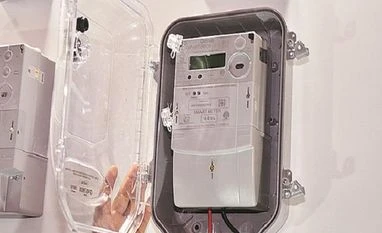 "Not all state power distribution cos see financial benefit in smart meters")











