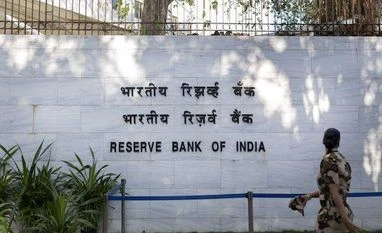
The Reserve Bank of India (RBI) on Friday said bond markets across the world were hampering the nascent recovery, and urged local investors to help the central bank to ensure an “orderly evolution of the yield curve”.
“As countries rush to inoculate their populations, the global economy should regain lost momentum in Q2. Bond vigilantes could, however, undermine the recovery, unsettle financial markets, and trigger capital outflows from emerging markets,” wrote the RBI in its State of the Economy report for the March bulletin.
For the Indian bond market, in particular, the report said: “The Reserve Bank is striving to ensure an orderly evolution of the yield curve, but it takes two to tango and forestall a tandav.” The report has been authored by Deputy Governor Michael Patra, among others.
The central bank is clearly using all the platforms at its disposal to engage with the bond market. Governor Shaktikanta Das, in the past, has asked the market to be cooperative and not combative, but the market has recently started demanding higher yields, seeing the US yields and oil prices heading north, and is asking for more secondary market support. The RBI has cut down on its secondary market support a little, but it has also given some concessions on the demand for higher yields.
The 10-year bond yields closed at 6.19 per cent on Friday. The benchmark 10-year yield, which had averaged 5.93 per cent during April 2020-January 2021 surged to 6.13 per cent on February 2 on the announcement of the market borrowing programme of the central government, and has largely remained at those elevated levels, barring a few days when it dipped back below 6 per cent on RBI measures.
“With the US 10-year benchmark soaring to 1.6 per cent from around 1 per cent, bond markets in India were pit-roasted by persistent selling and shorting. By March 5, the benchmark in India had touched 6.23 per cent,” the report noted. Yields have firmed up subsequently on spillovers from the spike in US yields, it said.
The report went on to record how the short-lived turmoil “gave a glimpse of the destabilising impact of expectations running too far ahead of outcomes”.
“As growth forecasts for 2021 are ratcheted up, they see in them the spectre of long dormant inflation …With these latent anxieties, bond vigilantes turn sceptical about the central bank’s promise to remain accommodative and start the rout,” the report said, adding: “Bond vigilantes are riding again, ostensibly trying to enforce law and order on lawless governments and central banks but this time around, they could undermine the economic recovery and unsettle buoyant financial markets.”
Mentioning about the RBI governor’s promise of ample liquidity in the market, the report said “this type of calming forward guidance from central banks also hides a tension -- their nerves can fray if they see a painfully extracted economic revival, and financial stability built at the altar of regulatory forbearance, threatened by adventurism”.
Central banks can do more asset purchases, but the stability in the market will come at the cost of market activity. The central banks can put a lid on yields if they want to, but what “markets do not realise beyond the break-evens, TIPS and policy stimulus is that there is no way the economy can withstand higher interest rates in its current state. It is recovering but certainly not out of the woods yet. There is much sense in what the Reserve Bank is doing in striving to ensure an orderly evolution of the yield curve,” it said.
According to the report, the present stock of public debt at around 90 per cent of the gross domestic product (GDP) will go down to about 85 per cent at end-March 2026 as the GDP growth rate exceeds the rate of interest on the stock of public debt. India’s monetary policy is also credible. Thus, “India can decouple from other emerging economies for which rising financing costs and rising pile-ups of debt hamstring the recovery.”
The rollout of vaccines, led by India, is helping the world economy recover faster. Domestically, “the swift pace of vaccination raises hopes of a faster recovery, given that the recent spike in Covid-19 infections is largely restricted to a few states, and restrictions in terms of partial lockdowns/squeeze in market hours/ night curfews have been primarily local”.
But global trade logistics disruptions are posing fresh challenges to the recovery. The capex cycle in India, however, is turning for the good.
The Union government has increased its capital expenditures; capital expenditures of 20 states have also picked up pace to the pre-pandemic level. The third-quarter results show revival of key capital goods producing firms, with revenue growth steadily improving. Infrastructure firms have also recorded a healthy expansion in order books, with demand from transmission, distribution, green energy business, roads and highways, railways and metro services, the report noted.
The real estate sector has shown signs of revival, and investment in machinery and equipment has risen.
Credit growth of banks may have bottomed out as it grew at 6.6 per cent year-on-year on February 26, 2021 compared with 6.1 per cent last year. Transmissions have improved in banks. In response to the 250 basis points repo rate cut since February 2019, the weighted average lending rate on fresh rupee loans sanctioned by banks declined by 183 bps, of which 112 bps cut was affected since March 2020.
Inflation would likely ease after June, but would still look higher because of the base effect. Overall, “there is a restless urgency in the air in India to resume high growth,” and, “all around, optimism is taking hold, among households and businesses, investors and markets,” the RBI report said.