Solar PLI scheme to benefit incremental panels demand till FY30: Ind-Ra
The allocation of Rs 4,500 crore towards solar modules manufacturing industry can benefit sales of 20 gigawatts from capacity developed under the production linked incentive scheme, Ind-Ra estimates
ANI The allocation of Rs 4,500 crore towards solar modules manufacturing industry can benefit sales of 20 gigawatts from capacity developed under the production linked incentive (PLI) scheme, India Ratings and Research (Ind-Ra) estimates.
The scheme is definitely a shot-in-the-arm and much-required step to tackle import requirement and bring it down from 90 per cent import requirement levels to 64 to 74 per cent on an average till FY30.
However, said Ind-Ra, the amount under PLI will have to go significantly up if India has to reduce its import dependence, assuming the country proceeds on its target of 280 GW solar capacity by FY30.
Supply and logistical constraints have already pushed estimated under-construction solar project costs for developers by 10 to 12 per cent.
Besides, the Ministry of New and Renewable Energy (MNRE) says the overall extension in timelines for the commissioning of solar power generation projects is limited to six months.
Ind-Ra said solar power developers are walking on a tight rope, given that they need to commission projects well before April 1, 2022 when the 25 per cent and 40 per cent basic customs duty kick in for solar cells and modules respectively.
These capacities will still have to come up based on imported modules, given that it will take time for domestic manufacturing capacities to set up.
"More broad-based solar module procurement strategies including a healthy mix of domestically manufactured solar modules may mitigate these kinds of risks over the long run," said Ind-Ra.
Also, the scheme can lead to more sector consolidation (from the current 15 to 20 players with significant capacities) to benefit from the economies of scale and requirement of minimum capacity to benefit from the scheme.
But on the flip side, given the strict timelines for implementation, the scheme may lose out on its intended purpose for the level of backward integration.
"All in all, this a good start but timely disbursements, ease of processes and scaling up the scheme amount will be key things to look out for over short to medium tenure to see India self-reliant and simultaneously being economically viable to meet its solar power ambitions," said Ind-Ra.
(Only the headline and picture of this report may have been reworked by the Business Standard staff; the rest of the content is auto-generated from a syndicated feed.)

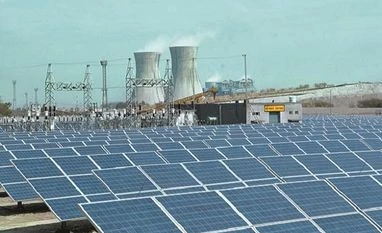 "Solar PLI scheme to benefit incremental panels demand till FY30: Ind-Ra")


 Connect with us on WhatsApp