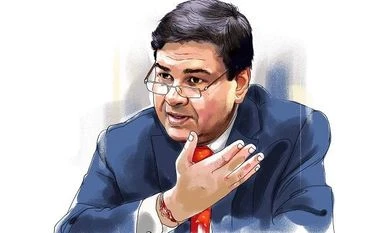
Reserve Bank of India (RBI) Governor Urjit Patel delivered a shocker on Monday by resigning, effective immediately, citing personal reasons. The 24th RBI governor resigned nine months before his term was to end. Patel’s abrupt resignation could impact the financial markets. Rating agency Moody’s said any attempt by the government to curtail the RBI’s independence would be credit negative.
If Patel resigned due to differences with the government, as is suspected, he would be second only to Benegal Rama Rau to do so before expiry of term due to differences with the finance minister. Rau was RBI’s second Indian governor who quit in 1957. Patel's deputy Viral Acharya — initially speculated to have resigned too — continues to stay at the RBI, for now. However, analysts doubt how long he can continue. Acharya, in his October 26 speech, criticised government officials for undermining RBI’s autonomy. This was seen as an extension of Patel's fight to prevent any intervention in RBI functioning.
An RBI board member said N S Vishwanathan, the senior most deputy, might take over as interim governor and will take a call on whether the next board meeting on December 14 will be convened. Though a search panel has been formed, names of former finance secretary Hasmukh Adhia and member of finance commission Shaktikanta Das are already doing the rounds.
ALSO READ: Urjit Patel's resignation disturbing, can impact top RBI team “While the motivation for the RBI governor’s resignation is unclear, the independence of a country's central bank is an important consideration in our assessment of a institutional strength,” Moody’s said.
Moody’s the only global agency that upgraded India’s rating by a notch (Baa2 from Baa3) in November 2017 — said: “We would consider signs that the government attempts to curtail the central bank’s independence to be credit negative.” It also said ultimately the institution and its policies mattered, not the individual.
Patel's resignation comes days after he refused to answer questions on relationship with the government during the announcement of the monetary policy committee (MPC) decisions. The RBI board members were caught unawares of the governor's resignation. Satish Marathe, a member of the RBI board, said: "I am saddened and surprised, particularly when things looked to have been resolved unanimously.”
A person aware of the developments said Patel's resignation was a surprise because only a few days ago the RBI and the government had come to an agreement over a crucial issue of the structure and terms of reference of a committee to review the economic capital framework of the RBI. Patel and Finance Minister Arun Jaitley had mutually decided to appoint Bimal Jalan as the chairman and Rakesh Mohan as the vice-chairman. The RBI was earlier pushing for Mohan as the panel head.
In many ways, the resignation was not entirely unexpected, but most observers were of the view that both the sides had smoked the peace pipe after the marathon 10-hour board meeting on November 19. It was agreed there that RBI’s reserves won’t be touched, but the central bank would be flexible in examining if some banks could be brought out of the prompt corrective action framework (PCA). It was also agreed that a restructuring scheme for stressed micro and small enterprises would be introduced.
Tensions started after the government blamed the RBI for lack of oversight in the Rs 143-billion Punjab National Bank scam. Equations became sour following a circular released by the RBI on February 12. There, the central bank said if a loan was due for more than 91 days, it was in default and recovery proceedings could be started against the account.
It led to a direct clash, as the government wanted to dilute the provisions to favour of power firms. The government was upset with the governor over lack of consultation on key regulatory issues, according to finance ministry officials.
The RBI did not even bother to send its representative to a meeting of the Cabinet committee on power sector loans, having earlier communicated its unwillingness to compromise on the February 12 circular.
In many ways, efforts to move Patel out were seen as having gathered momentum after that.
The government also partially invoked section 7 of the RBI Act, which has never been used so far, to force RBI toe the government line.
Patel fought back, openly criticising the government at policy conferences. He also wanted the government to give the RBI more powers over public sector bank boards.
The inconclusive October 23 board meeting of the RBI again went on for 10 hours and brought out in the open the differences on a whole host of issues, including how liquidity would be given to the cash-strapped NBFC segment in the aftermath of IL&FS group defaults. Credit to micro and small enterprises, as well as letting some banks come out of the restrictive prompt corrective action, was also discussed.
Three days later, Acharya surprised everybody by indirectly suggesting that RBI’s autonomy was in threat and that the governor might have to resign.

 "Urjit Patel quits as RBI governor 9 months before his term was to end")












