BS Number Wise: There are no NEET solutions

Tamil Nadu has no faith in the test to select students for medical colleges, data shows there is little reason to chuck out the system
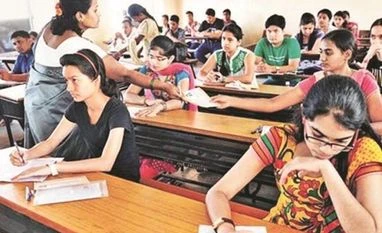
NEET exam
Ishaan Gera New Delhi
2 min read Last Updated : Oct 26 2021 | 10:56 PM IST
In November 1971, philosophers Noam Chomsky and Michel Foucault held a debate on the question of human nature. Foucault argued that institutions perpetuated the dominance of one class: replacing or dismantling systems would not eliminate the hierarchy but shift the dynamic of power.

A version of that debate is playing out in India where the central and state governments are arguing over a highly competitive test to pick students for medical colleges. The National Eligibility cum Entrance Test (NEET) was instituted in 2013 to replace a system of multiple tests and stop medical colleges from selling seats by charging a so-called capitation fee. The NEET helped, but new issues cropped up.

Tamil Nadu’s legislative assembly last month passed a resolution seeking exemption from the NEET. The state quoted a report by a nine-member committee headed by former judge Justice A K Rajan to say that the test discriminates against the poor and does not treat students as equals. The report said Indian languages were losing relevance under the NEET.

The committee's findings pertain only to Tamil Nadu: nationwide data profiling NEET applicants is not available to corroborate the state’s argument against the test.

Despite criticism, the number of students appearing for NEET has doubled across the country since 2016. Student registrations for NEET in Tamil language were 17-times higher in 2020 compared to 2019.

Does NEET create a system of expensive tuition that only the privileged can afford?

Granular data on registrations for NEET and medical student admissions is unavailable. Data from National Sample Surveys on social consumption shows the increase in the education expenditure by households on senior secondary classes (Class XI and Class XII) has been lower compared to spending on other classes.

Average expenditure on higher secondary education increased 9.7 per cent between 2014 and 2018: a period when consumer prices went up 21.2 per cent. Expenditure on secondary education (Classes VIII-X) increased 20.8 per cent—more in line with the rise in inflation—in the same period. The average expenditure on education for primary and upper primary classes was nearly a third higher since 2014. Primary and secondary education has got more expensive than higher secondary.  


Given the race to crack entrance exams, expenditure on coaching or private tuitions should increase. It has not.

Instead, the share of private coaching in total education expenditure decreased in 2018 compared to 2014. Private coaching in 2014 accounted for 15 per cent of the total spending. Four years later, its share in total education expenditure was 12 per cent.


So, why is NEET being criticised?

NEET is not without problems. It has a bias for privileged candidates — a factor which would not show in data averages — who can avail of the best facilities to prepare for the test. An efficient way to bridge that gap is to introduce free tuition and bridge courses.

Curriculum for state boards can be brought in line with the entrance examination.

Going back to a system that perpetrated admission scandals cannot be a solution. Those demanding scrapping NEET must realise that a system that promotes capitation fees or presses students to score high marks in board exams also tilts towards the privileged section of society.

Neither Foucault nor Chomsky proposed an alternative system that puts an end to class dominance. The point of their debate was that systems must continuously evolve. NEET must too.
 

One subscription. Two world-class reads.

Already subscribed? Log in

Subscribe to read the full story →
*Subscribe to Business Standard digital and get complimentary access to The New York Times

Smart Quarterly

₹900

3 Months

₹300/Month

SAVE 25%

Smart Essential

₹2,700

1 Year

₹225/Month

SAVE 46%
*Complimentary New York Times access for the 2nd year will be given after 12 months

Super Saver

₹3,900

2 Years

₹162/Month

Subscribe

Renews automatically, cancel anytime

Here’s what’s included in our digital subscription plans

Exclusive premium stories online

  • Over 30 premium stories daily, handpicked by our editors

Complimentary Access to The New York Times

  • News, Games, Cooking, Audio, Wirecutter & The Athletic

Business Standard Epaper

  • Digital replica of our daily newspaper — with options to read, save, and share

Curated Newsletters

  • Insights on markets, finance, politics, tech, and more delivered to your inbox

Market Analysis & Investment Insights

  • In-depth market analysis & insights with access to The Smart Investor

Archives

  • Repository of articles and publications dating back to 1997

Ad-free Reading

  • Uninterrupted reading experience with no advertisements

Seamless Access Across All Devices

  • Access Business Standard across devices — mobile, tablet, or PC, via web or app

Topics :NEETBS Number WiseNEET medical entrance testdoctorsTamil Naduhigher education

Next Story



