PNB fraud: Banks Board Bureau may wind up in March after Vinod Rai's exit

It is unlikely the government will look for a successor to Rai, sources familiar with the developments said
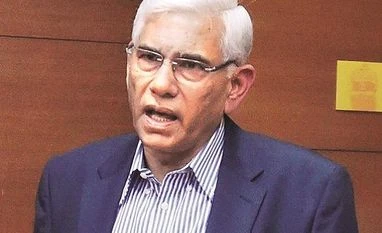
Vinod Rai
Vinod Rai
Subhomoy Bhattacharjee New Delhi
Last Updated : Feb 20 2018 | 1:38 AM IST
Hard on the heels of the Nirav Modi fraud case, which has shaken public trust in state-owned banks, the Banks Board Bureau (BBB), set up by the government as a makeover platform for these banks, will effectively close down in March. 

The term of BBB Chairman Vinod Rai (pictured), who was tasked with advising the government on enforcing “a code of conduct and ethics for managerial personnel” in these banks, will expire at the end of March. It is unlikely the government will look for a successor to Rai, sources familiar with the developments said.

The BBB has not been able to live up to expectations that it will improve the quality of human resources in state-owned banks from the boardroom down to entry-level probationary officers. Over the weekend, as Punjab National Bank (PNB) moved its general manager (human resources) out of his role, the almost parallel eclipse of the bureau demonstrates why scams like the one involving Nirav Modi occur repeatedly: Scamsters take advantage of the abysmal management of human resources in these banks. 


The bureau was set up in February 2016 under Rai, former Comptroller and Auditor General, to address these deficiencies.

It included the secretary, department of financial services in the finance ministry, and a deputy governor of the Reserve Bank of India, besides senior bank executives. However, it never got going, except in choosing candidates for executive-level posts in banks.

Even these have been delayed. The BBB chose Rajnish Kumar as Arundhati Bhattacharya’s successor as chairman of State Bank of India in July 2017 but the decision was announced by the Appointments Committee of the Cabinet on October 4, 2017, just days before the latter retired. The candidate for the post of managing director in the same bank has been cleared, but the person’s name is yet to be announced. The finance ministry, wary of sharing its role in managing officers of public sector banks, has refused to engage with the bureau. The BBB has also suggested standard eligibility criteria for non-official directors in these banks.


The BBB has recommended that non-official directors be allowed to play the role of independent directors on the same lines as provided in the Companies Act, 2013, and be paid on the same lines as provided for in the Act. The government is yet to respond, though it has made the application process transparent by hosting it online on the website of the department of financial services. Efforts to reach Rai for comments for this report proved futile. At the other end, PNB and other large state-owned banks like the Bank of Baroda have halved their in-service training for probationary officers to about a year from 24 months. India’s second-largest government-owned bank has not sent its treasury and forex operations personnel for refresher training for long. 

“It is not that these officers do not know their jobs. However, exchange of information at training programmes builds back-up officers,” said a high-level executive at PNB on condition of anonymity. Last Friday, PNB introduced additional checks on forex operations, which are now to be routed through one more layer of management. 

It is scrambling to locate officers who can move in immediately. Because of a lack of board-level supervision, the task of building up a cadre of knowledgeable officers at these banks has suffered. Data from the PNB annual report show the average time spent by its officers in training was just six man-days in 2016-17. To its credit, the bank has built up a well-equipped institute of information technology and has central- and regional-level training centres. The training programmes for smaller banks, typically mid-level and small state-owned banks, are abysmal. A senior SBI executive confirmed that loan appraisals made by the bank were routinely collected by executives from these banks and then these reappeared with the letterhead changed. 

Biswajit Nag, an associate professor at the Indian Institute of Foreign Trade, estimates that it takes at least 30 continuous classroom hours for bank executives to become well-equipped in handling documentation, logistics, and the financing aspects of foreign trade. Banks rarely have the time to send their executives for even half that time. 

Rajesh Chakrabarti, a professor at the Jindal Global School, said, “If one includes issues of ethics in the curriculum, the time taken has to be longer.”


The BBB was tasked by the government to “build a databank containing data relating to the performance of (state owned banks), its senior management and the board of directors and share the same with the government”. It was also supposed to “help banks develop a robust leadership succession plan for critical positions through appropriate HR processes, including performance management systems”. Both these tasks appear crucial at this time of crisis.

Last week, as l’affaire Nirav Modi exploded, the BBB asked the Indian Banks Association, the leadership team of Indian banks, to appoint a knowledge partner to “design, implement and institutionalise a flagship leadership development strategy for public sector banks in India”. The firm will also “assess the leadership competencies and potential capabilities of personages appearing in the process for appointment as whole-time directors of public sector banks in India”. The terms are almost the same as the ones the BBB started out with.


One subscription. Two world-class reads.

Already subscribed? Log in

Subscribe to read the full story →
*Subscribe to Business Standard digital and get complimentary access to The New York Times

Smart Quarterly

₹900

3 Months

₹300/Month

SAVE 25%

Smart Essential

₹2,700

1 Year

₹225/Month

SAVE 46%
*Complimentary New York Times access for the 2nd year will be given after 12 months

Super Saver

₹3,900

2 Years

₹162/Month

Subscribe

Renews automatically, cancel anytime

Here’s what’s included in our digital subscription plans

Exclusive premium stories online

  • Over 30 premium stories daily, handpicked by our editors

Complimentary Access to The New York Times

  • News, Games, Cooking, Audio, Wirecutter & The Athletic

Business Standard Epaper

  • Digital replica of our daily newspaper — with options to read, save, and share

Curated Newsletters

  • Insights on markets, finance, politics, tech, and more delivered to your inbox

Market Analysis & Investment Insights

  • In-depth market analysis & insights with access to The Smart Investor

Archives

  • Repository of articles and publications dating back to 1997

Ad-free Reading

  • Uninterrupted reading experience with no advertisements

Seamless Access Across All Devices

  • Access Business Standard across devices — mobile, tablet, or PC, via web or app

Next Story



