The pivot of monetary policy has shifted squarely to growth

It is only next year when RBI expects growth to increase to 6.8 per cent that repo rate will be raised
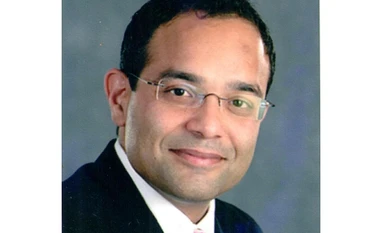
Sameer Narang, Chief Economist, Bank of Baroda
Sameer Narang
4 min read Last Updated : Apr 07 2021 | 2:29 PM IST
In the midst of a rapidly changing COVID-19 backdrop in India, the monetary policy committee (MPC) kept policy rates unchanged and maintained an accommodative stance. MPC members reiterated their resolve to continue with an accommodative stance as long as necessary, to sustain growth on a durable basis and mitigate the impact of COVID-19 on the economy. With this, MPC members removed time based guidance given in the earlier policies.

The pivot of monetary policy has shifted squarely to growth. But economic recovery is contingent on vaccination, spread of infection and normalisation of economic activity. Clarity on these will emerge over time. Even with the rising uncertainty on growth, RBI has maintained its growth guidance of 10.5 per cent in FY22. Juxtaposing FY22 growth estimate with CSO’s estimate of decline in GDP growth of 8 per cent in FY21 implies real GDP in FY22 will be only 1.7 per cent higher than FY20. Interpreting this in terms of RBI’s growth based guidance, it implies repo rate is likely to remain unchanged this year. It is only next year when RBI expects growth to increase to 6.8 per cent that repo rate will be raised.

While removing time based guidance, RBI announced an asset purchase program, G-Sec Acquisition Program (GSAP), of Rs 1 lakh crore in Q1FY22 with Rs 25,000 crore of purchase on 15 April 2021 itself. In that very week, a government auction of Rs 26,000 crore was lined up. So RBI will absorb one full auction this month. The magnitude of GSAP in Q1 will also give comfort to the bond market since RBI’s net OMO purchases in FY21 were Rs 3.13 lakh crore. Long-end yields, in particular 10 year maturity, reacted positively after the announcement. In fact, this will go down well with the bond market when Centre’s borrowing is tilted towards long-end (69 per cent of borrowings in H1 is more than 10 year maturity).

However, the bigger challenge for MPC is the inflation trajectory. RBI has raised its inflation forecast for Q2 and Q3 by 0.2 per cent and 0.1 per cent respectively to 5.2 per cent and 4.4 per cent respectively. With this, RBI is projecting inflation at 5 per cent in FY22, which is a full 1 per cent higher than RBI’s target of 4 per cent. In fact, RBI’s projection for FY23, which is released in the Monetary Policy Report is 4.7 per cent. During FY21 (the year gone by), inflation came in at 6.2 per cent. Thus, for three consecutive years inflation is likely to be higher than RBI’s target. As against this, inflation in the previous four years (FY17-20) was close to target.  

The upward momentum in inflation has emerged from rising global commodity prices. In Oct’20, oil prices were hovering around US$ 38/bbl and are now at US$ 63/bbl. Similarly, global agriculture prices have increased by 21 per cent over the last six months. Commodity prices as measured by the CRB index have increased by 24 per cent. Higher inflation is thus essentially a supply side phenomena driven by rising global demand. Even domestic demand is fast expanding as seen in rising imports.

In the current policy, MPC has managed to open up room for normalisation of monetary policy by withdrawing time contingent guidance to one pivoted on growth without disrupting the markets. Few EM central banks have already increased policy rates before the US monetary policy cycle turns. RBI may look at compressing the rate corridor (difference between repo and reverse repo rate) this year before raising repo rate next year.

Sameer Narang is chief economist at Bank of Baroda. Views are his own.

One subscription. Two world-class reads.

Already subscribed? Log in

Subscribe to read the full story →
*Subscribe to Business Standard digital and get complimentary access to The New York Times

Smart Quarterly

₹900

3 Months

₹300/Month

SAVE 25%

Smart Essential

₹2,700

1 Year

₹225/Month

SAVE 46%
*Complimentary New York Times access for the 2nd year will be given after 12 months

Super Saver

₹3,900

2 Years

₹162/Month

Subscribe

Renews automatically, cancel anytime

Here’s what’s included in our digital subscription plans

Exclusive premium stories online

  • Over 30 premium stories daily, handpicked by our editors

Complimentary Access to The New York Times

  • News, Games, Cooking, Audio, Wirecutter & The Athletic

Business Standard Epaper

  • Digital replica of our daily newspaper — with options to read, save, and share

Curated Newsletters

  • Insights on markets, finance, politics, tech, and more delivered to your inbox

Market Analysis & Investment Insights

  • In-depth market analysis & insights with access to The Smart Investor

Archives

  • Repository of articles and publications dating back to 1997

Ad-free Reading

  • Uninterrupted reading experience with no advertisements

Seamless Access Across All Devices

  • Access Business Standard across devices — mobile, tablet, or PC, via web or app

Topics :RBI monetary policyRBI Policy

Next Story



