The signal from Mint Road is clear: The increase in interest rates for the second time in as many months isn’t enough. Though Reserve Bank of India (RBI) Governor Raghuram Rajan told reporters after announcing the half-yearly monetary policy review that the central bank’s next rate move would not necessarily be upwards, market players expect the contrary.
“We expect RBI to raise the repo rate by another 25 basis points at its December policy meeting. A sharp estimated jump in inflation, now at the highest since the series began in June 2006, also poses an upside risk to our rate forecast,” said Samiran Chakraborty, head of regional research (South Asia), Standard Chartered Bank. Rating agency CRISIL said RBI could increase the repo rate to eight per cent at its next policy review, on December 18.
Many others hold a similar view after RBI on Tuesday increased the key policy rate, or the repo rate, by 25 bps to 7.75 per cent, and reduced the marginal standing facility (MSF) rate by an equal amount (to 8.75 per cent) to bring down banks’ cost of funds. The reason for the general belief that Rajan might not yet be finished with tightening, despite sluggish growth, is his statement that the “overall WPI (Wholesale Price Index) -based inflation is expected to remain higher than the current level through most of the remaining part of the year, warranting an appropriate policy response”.
Rajan justified the hawkish stance by saying “you should not see the fight against inflation as anti-growth. It is going to be the best medicine for sustainable growth going forward”.
RBI placed an increased stress on the need to provide positive real returns to savers to curb the “erosion of financial savings”. For the first time, it provided Consumer Price Index (CPI) -based inflation projections, indicating the increasing importance of CPI in policy decisions. Rajan said retail inflation could be over nine per cent in the absence of policy actions.
The central bank expects the rate of economic growth this financial year to again be five per cent, below its earlier forecast of around 5.5 per cent but still above the estimates of many private-sector forecasters. “The pass-through of rupee depreciation into prices of manufactured products is acting, along with elevated food and fuel inflation, to offset possible disinflationary effects of low growth,” Rajan said in his policy statement.
As food prices rose, the headline WPI-based inflation rate in September unexpectedly surged to a seven-month high of 6.46 per cent — well above RBI’s perceived comfort level of around five per cent — while the CPI-based inflation rate jumped an annual 9.84 per cent. RBI on Tuesday said the rate of CPI-based inflation would remain above nine per cent in coming months.
The markets, however, were relieved. The BSE benchmark Sensex, snapping a five-day losing streak, rose 1.74 percent, or 358.73 points, over its previous close to end at 20,929.01, its highest closing level since November 2010, as bank stocks surged on the announcement of a repo rate hike. This was in line with bankers’ expectations. Some traders had feared the central bank would raise interest rates more aggressively to combat inflation.
While corporate India expressed disappointment over the repo rate hike, bankers remained ambivalent on the impact of the policy announcement and refrained from giving a guidance on the direction in which lending rates could be heading.
“I think, there are several moving parts here, so one should wait for some time and see what exactly are the effects on the cost of funds. A call should be taken only after that,” said ICICI Bank MD & CEO Chanda Kochhar.
“Yes, some rate changes will be expected,” said State Bank of India Chairperson Arundhati Bhattacharya. But she also declined to give a direction in which the changes might pan out. HDFC Bank MD Aditya Puri said: “Cost of funds have gone up over the past three months. We are going back to a normalised monetary policy and over a period, it would come down.” Puri said if the deposit rates went up, the lending rates would also follow suit.
Punjab National Bank CMD K R Kamath, who also heads the Indian Banks Association, pointed to the policy comment on making deposits attractive by increasing the rates of interest. “It is also a feeling that the returns we are giving to the depositors are negative, if you factor average inflation impact. Unless you make your deposits attractive, the money may not come to the banking system... banks should work on getting deposits,” he said, adding this should not be seen as any hint of a rise in deposit rates.
By increasing the repo rate and lowering the MSF rate, RBI has restored the 100-bp interest corridor, which indicates return to normalcy as the foreign exchange market stabilises. The MSF rate had been raised by 200 bps in July and banks’ borrowing through the liquidity adjustment facility was capped to make short-term money dearer and curb speculation in the foreign exchange market.
Though the corridor has been restored, bankers say MSF rate continues to be the operational rate, with overnight rates expected to remain close to 8.75 per cent if the LAF borrowing cap — 0.5 per cent of banks’ net demand and time liabilities — is not removed.

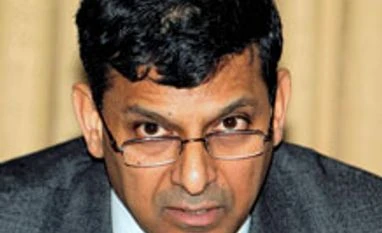 "RBI signal: Expect more rate hikes")


 Connect with us on WhatsApp