Uneven economic recovery nudged MPC to continue policy support: Minutes

The six-member MPC voted to keep the policy rate unchanged and continued with the accommodative stance at its meeting on February 10
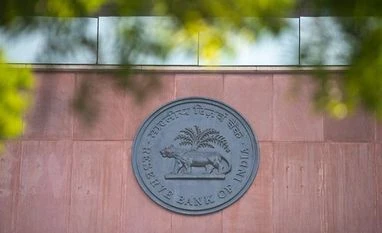
RBI, Reserve Bank of India
Photo: Shutterstock
Subrata Panda Mumbai
4 min read Last Updated : Feb 25 2022 | 12:10 AM IST
Members of the Monetary Policy Committee (MPC) felt that though the Indian economy was resilient in the third wave, it, however, lost some momentum and with inflation likely to soften, there is room to continue with the accommodative stance and support revival, the minutes of the MPC meeting released on Thursday revealed.

The six-member MPC voted to keep the policy rate unchanged and continued with the accommodative stance at its meeting on February 10. However, external member Jayanth Verma voted against the stance because he felt a switch to neutral was long overdue and the current stance has become counterproductive and deflects focus away from addressing recessionary trends that date back to at least 2019.

Reserve Bank of India (RBI) Governor Shaktikanta Das said, “The expected moderation in inflation trajectory over the next financial year provides room for monetary policy to remain accommodative. At the same time, economic recovery from the pandemic remains incomplete and uneven and continued support from various policies remains crucial for a sustained recovery”.

He, however, cautioned that the renewed surge in crude oil prices requires close monitoring.

“We need to remain watchful of the risks to domestic inflation arising from rise in international commodity prices due to exogenous factors including geo-political developments,” Das said. The MPC has pegged inflation at 4.5 per cent for the next fiscal year, which is well within its target of 4 per cent, with a tolerance band of plus or minus 2 per cent. “Economic activity in India appears to have resiliently withstood the third wave, but messages from incoming high frequency indicators are mixed. It is prudent to assume that the recovery may have lost some momentum during Q4[FY22] and Q1[FY23]. Inflation appears to be approaching an inflection point after which it is projected on a downward path through all of [FY23],” said Michael Patra, deputy governor, RBI.

He explained that the surge in inflation is not because of excess demand but rather due to supply constraints and monetary policy has a role in aligning demand with supply but not the other way round.


“When inflation is driven by demand, monetary policy can stabilise inflation and growth. Monetary policy cannot play its stabilisation role when inflation is the result of supply constraints. So central banks have a choice: Either accept higher inflation for some time or be prepared to be accountable for destroying demand,” he said.

Mridul Sagar, executive director, RBI, cautioned that the size of the government’s gross market borrowing of Rs 14.3 trillion is large, and hence a smooth rebalancing of liquidity is critical. But that does not mean monetary policy should no longer support growth. “While the capex push in the latest Budget will support growth, monetary policy still has a complementary role to play. Uncertainty remains on account of whether states and PSUs will keep capex high this year and whether execution will remain on track”, he said.

External member Verma felt with third wave waning, the objective of the monetary policy has to be looked at from a broader perspective. “Monetary policy acts with lags, and it is important to set policy looking at the expected state of the economy 3-4 quarters from now and not in terms of where it is today,” he said.

Ashima Goyal, external member of the MPC, said consumption continues at below pre-pandemic levels, pointing to loss of income and demand.

External Member Shashanka Bhide said to strengthen growth trends, the need for favourable monetary and financial conditions has remained critical. Pickup in momentum of consumption and investment expenditure would require access to financial resources to both consumers and firms.

One subscription. Two world-class reads.

Already subscribed? Log in

Subscribe to read the full story →
*Subscribe to Business Standard digital and get complimentary access to The New York Times

Smart Quarterly

₹900

3 Months

₹300/Month

SAVE 25%

Smart Essential

₹2,700

1 Year

₹225/Month

SAVE 46%
*Complimentary New York Times access for the 2nd year will be given after 12 months

Super Saver

₹3,900

2 Years

₹162/Month

Subscribe

Renews automatically, cancel anytime

Here’s what’s included in our digital subscription plans

Exclusive premium stories online

  • Over 30 premium stories daily, handpicked by our editors

Complimentary Access to The New York Times

  • News, Games, Cooking, Audio, Wirecutter & The Athletic

Business Standard Epaper

  • Digital replica of our daily newspaper — with options to read, save, and share

Curated Newsletters

  • Insights on markets, finance, politics, tech, and more delivered to your inbox

Market Analysis & Investment Insights

  • In-depth market analysis & insights with access to The Smart Investor

Archives

  • Repository of articles and publications dating back to 1997

Ad-free Reading

  • Uninterrupted reading experience with no advertisements

Seamless Access Across All Devices

  • Access Business Standard across devices — mobile, tablet, or PC, via web or app

Topics :monetary policy committeeIndian EconomyRBI PolicyMPC minutesMPC

Next Story



