
Australia rejects $36 billion wind, solar, hydrogen project due to impact
The decision left what would have been one of the world's largest green energy projects in limbo for now
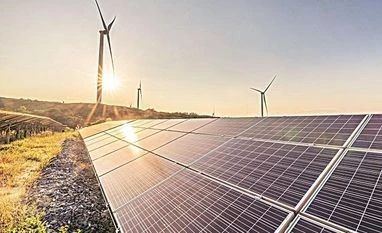 "Australia rejects $36 billion wind, solar, hydrogen project due to impact")
WebinarsNew
Deep DiveNew
Explore Business Standard
The decision left what would have been one of the world's largest green energy projects in limbo for now
By Sonali Paul
MELBOURNE (Reuters) - The Australian government has rejected plans for a $36 billion wind, solar and hydrogen project in a remote area of Western Australia, leaving what would have been one of the world's largest green energy projects in limbo for now.
In a decision dated June 15, published on the environment department's website, Environment Minister Sussan Ley ruled that the project, the Asian Renewable Energy Hub (AREH), "will have clearly unacceptable impacts" on internationally recognised wetlands and migratory bird species.
The AREH project, located in the state's Pilbara region, was designed to initially build 15 gigawatts (GW) of renewable energy capacity, eventually to be expanded to 26 GW and produce green hydrogen and ammonia for export.
The government had awarded the project fast-track approval status last September, touting the jobs, clean energy for local industry and large-scale export opportunity that it would bring. AREH is being developed by privately owned InterContinental Energy, renewables developer CWP Energy Asia, top global wind turbine maker Vestas and a Macquarie Group fund.
The environment minister cited the expansion plan in the rejection decision. The project's original plan won environmental approval last December.
The proposed enlargement came with a port facility for ammonia; a town that would be home to 8,000 people including project workers; expanded solar arrays; ammonia, hydrogen and desalination plants and storage facilities; and a pipeline route for transporting ammonia, seawater and brine through wetlands.
"We are now working to understand the minister's concerns, and will engage further with the minister and her department as we continue to work on the detailed design and engineering aspects of the project," the AREH consortium said in a statement. The project, on the drawing board since 2014, originally planned to generate wind and solar power and transmit it via an undersea cable to Asia, but last year changed plans, aiming to use clean power to split water to produce hydrogen and ammonia for export.
Australia's Clean Energy Council on Monday said it expects the government will work with AREH to assess and address any environmental impacts. "If the government is to be taken seriously on developing a hydrogen economy, companies prioritising genuinely zero emissions projects should be assisted to reach a final investment decision," said Dan Gocher, climate and environment director at the Australasian Centre for Corporate Responsibility.
(Reporting by Sonali Paul; Editing by Kenneth Maxwell)
(Only the headline and picture of this report may have been reworked by the Business Standard staff; the rest of the content is auto-generated from a syndicated feed.)
First Published: Jun 21 2021 | 12:29 PM IST


 Connect with us on WhatsApp