
Harvard professor found guilty of hiding ties to Chinese-run programme
A Harvard University professor charged with hiding his ties to a Chinese-run recruitment programme was found guilty on all counts Tuesday.
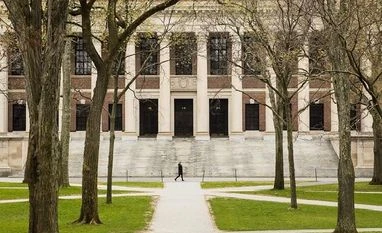 "Harvard professor found guilty of hiding ties to Chinese-run programme")
WebinarsNew
Deep DiveNew
Explore Business Standard
A Harvard University professor charged with hiding his ties to a Chinese-run recruitment programme was found guilty on all counts Tuesday.
A Harvard University professor charged with hiding his ties to a Chinese-run recruitment programme was found guilty on all counts Tuesday.
Charles Lieber, 62, the former chair of Harvard's department of chemistry and chemical biology, had pleaded not guilty to two counts of filing false tax returns, two counts of making false statements, and two counts of failing to file reports for a foreign bank account in China.
The jury deliberated for about two hours and 45 minutes before announcing the verdict following five days of testimony in Boston federal court.
Lieber's defense attorney Marc Mukasey had argued that prosecutors lacked proof of the charges. He maintained that investigators didn't keep any record of their interviews with Lieber prior to his arrest.
He argued that prosecutors would be unable to prove that Lieber acted "knowingly, intentionally, or willfully, or that he made any material false statement." Mukasey also stressed Lieber wasn't charged with illegally transferring any technology or proprietary information to China.
Prosecutors argued that Lieber, who was arrested in January, knowingly hid his involvement in China's Thousand Talents Plan a programme designed to recruit people with knowledge of foreign technology and intellectual property to China to protect his career and reputation.
Lieber denied his involvement during inquiries from U.S. authorities, including the National Institutes of Health, which had provided him with millions of dollars in research funding, prosecutors said.
Lieber also concealed his income from the Chinese program, including USD 50,000 a month from the Wuhan University of Technology, up to USD 158,000 in living expenses and more than USD 1.5 million in grants, according to prosecutors.
In exchange, they say, Lieber agreed to publish articles, organize international conferences and apply for patents on behalf of the Chinese university.
The case is among the highest profile to come from the US Department of Justice's so-called "China Initiative."
The effort launched in 2018 to curb economic espionage from China has faced criticism that it harms academic research and amounts to racial profiling of Chinese researchers.
Hundreds of faculty members at Stanford, Yale, Berkeley, Princeton, Temple and other prominent colleges have signed onto letters to US Attorney General Merrick Garland calling on him to end the initiative.
The academics say the effort compromises the nation's competitiveness in research and technology and has had a chilling effect on recruiting foreign scholars. The letters also complain the investigations have disproportionally targeted researchers of Chinese origin.
Lieber has been on paid administrative leave from Harvard since being arrested in January 2020.
(Only the headline and picture of this report may have been reworked by the Business Standard staff; the rest of the content is auto-generated from a syndicated feed.)
First Published: Dec 22 2021 | 8:30 AM IST


 Connect with us on WhatsApp