Hong Kong braced for an anti-government protest “stress test” of the airport this weekend, as weeks of sometimes violent demonstrations in the Chinese-ruled city showed no signs of let-up amid rising tension between China and some Western nations.
The airport, reached by a gleaming suspension bridge carrying both rail and road traffic, was forced to close last week when protesters, barricading passageways with luggage trolleys, metal barriers and other objects, clashed with police.
China’s Hong Kong affairs office condemned the mayhem as “near-terrorist acts”.
“Go to the airport by different means, including MTR, airport bus, taxi, bike and private car to increase pressure on airport transport,” protest organisers wrote online.
The unrest has widened into calls for greater freedom, fuelled by worries about the erosion of rights guaranteed under a “one country, two systems” formula, adopted after the handover, such as an independent judiciary and the right to protest.
The Canadian consulate said it had suspended travel to mainland China for local staff, just days after a Chinese employee of the city's British consulate was confirmed to have been detained in China.
China has said that Simon Cheng, the consulate employee, was detained in the border city of Shenzhen neighbouring Hong Kong. Beijing has accused Britain and other Western countries of meddling in its affairs in Hong Kong. Canada's latest travel advisory on Thursday warned that increased screening of travellers' digital devices had been reported at border crossings between mainland China and Hong Kong.
Chinese foreign ministry spokesman Geng Shuang said Canada's decision not to allow local staff to visit the mainland was one for Canada, which it respected. If people came to China and followed the law, they would have no problems, he told a daily news briefing.
But if you have a hidden aim, and are hatching a sinister plot, then I fear in China you need to be in a state of apprehension and extra careful. Protests on Friday included a march by accountants and a “Baltic Chain”, in which protesters will join hands across different districts in the evening, and a “rally of Christians”.
“A lot of bosses are apolitical. However, politics comes to you even when you try to avoid it,” a city legislator, Kenneth Leung, told the accountants' rally.
“We used to be ranked as the freest economy in the world for almost 20 years. Can we keep the ranking? No, it’s over. Our core values are integrity and honesty. We need to stick to our international core values.”
He put the number taking part in the march at 5,000.
In 1989, an estimated two million people joined arms across three Baltic states in a protest against Soviet rule that became known as the “Baltic Way” or “Baltic Chain”.
Sy said she was fired immediately after managers saw her Facebook account without being given a reason.
The Hong Kong Confederation of Trade Unions called on Cathay to end to what it described as “white terror”, following Sy's sacking. It said 14 people had been fired in connection with the protests.
White terror is a common expression to describe anonymous acts that create a climate of fear. Cathay pilots and cabin crew this week described political denunciations, sackings and phone searches by Chinese aviation officials. The protests are also taking a toll on the city's economy and tourism, with the special administrative region on the cusp of its first recession in a decade.
Corporations, including big banks and property developers, have called for a restoration of law and order.
Demonstrators have five demands: withdraw the extradition bill, set up an independent inquiry into the protests and perceived police brutality, stop describing the protests as “rioting”, waive charges against those arrested, and resume political reform.
Beijing has sent a clear warning that forceful intervention is possible, with paramilitary forces holding drills just over the border.

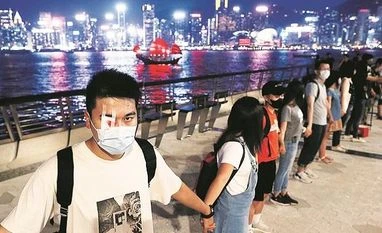 "Hong Kong braces for fresh anti-govt protests as activists target airport")











