How scandals, protests plunge some of world's greatest museums into crisis

The latest attacks on private philanthropy remove one of the only methods museums have to survive
museum
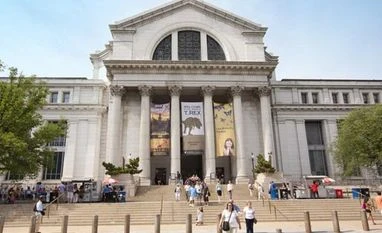
National Museum of Natural History in Washington DC. Photo: Shutterstock
James Tarmy | Bloomberg
4 min read Last Updated : Aug 17 2019 | 8:52 PM IST
Most art world squabbles never make it past the echoes of white-walled galleries, but a recent series of scandals and protests have spilled into the mainstream, plunging some of the world’s greatest museums into a crisis that hasn’t been seen since the furore of the 1980s culture wars.

Back then it was a group of senators attempting to defund the National Endowment for the Arts. This time, it’s private philanthropy that’s in the crosshairs. And it’s not politicians leading the charge but the artists themselves.

The latest head to roll is Warren Kanders, who stepped down from the board of the Whitney Museum of American Art on July 25 after a months long campaign against him. The reason: Kanders is chairman and chief executive officer of Safariland LLC, a manufacturer of tear gas that was purportedly used against migrants at the U S-Mexican border.

As a response, the group Forensic Architecture partnered with Academy Award-winning filmmaker Laura Poitras to make a video critical of Kanders’s businesses that went on view in the museum’s Whitney Biennial (through Sept 22). Another group called Decolonize This Place unfurled banners on the museum’s facade. Four artists requested that their work be removed from the museum because they refused “further complicity with Kanders and his technologies of violence.” About 100 Whitney staff members signed an open letter calling for Kanders to quit. In his resignation letter, Kanders cited “the targeted campaign of attacks against me and my company.”

At the same time, photographer Nan Goldin has led an assault on donations from the Sackler family, whose name is on the walls of institutions including the Metropolitan Museum of Art in New York, the Louvre in Paris, and the Harvard Art Museums in Cambridge, Mass. The family’s fortune is partially derived from the opioid OxyContin, and after a series of demonstrations this year, the Guggenheim and the Met in New York as well as the Tate in London announced they would no longer accept donations from the family. (The Louvre has since removed the Sacklers’ name.)

The increased scrutiny on the source of museum trustees’ wealth, augmented by the heightened activism in response, comes at a time when arts institutions are struggling to stay solvent at all. The American Folk Art Museum had to vacate its flagship space in New York in 2011; in 2015 the Museum of Biblical Art in New York closed altogether; earlier this year the Newseum in Washington, 

D C, announced the sale of its building to Johns Hopkins University.

American cultural institutions, starved of public support, need to fundraise. But an aging donor base, changes in the tax code that inhibit charitable giving, and a younger generation that priorities environmental and political causes over the arts have forced museums to fight for donations. This isn’t about capital campaigns or new buildings — it’s about keeping the lights on.

Admission fees represent about 16 per cent of the Met’s total $297 million revenue, according to its most recent annual report. Funds generated by philanthropy (both from the endowment and gifts) represented more than 50 per cent. At the Whitney, admissions represented 11 per cent of its almost $90 million total revenue last year — there, too, contributions and grants made up about 50 per cent. “The business of a museum is to serve the public, and those programs cost more to deliver than they earn,” says Amy Kaufman, a museum consultant whose clients include the Studio Museum in Harlem and Storm King Art Center in Cornwall, N Y. “As long as we choose not to [publicly] fund the majority of our cultural organisations, we’ll still be investing huge sums into fundraising year after year.”

Only now, fundraisers must reconcile the current “cancel” culture with the fact that massive wealth is inevitably controversial, which means it’s almost impossible to predict which trustee might become the next flashpoint. “Just think, three years ago, would  Kanders have even been challenged?” says Diana Duke Duncan, a Washington, D C-based museum management consultant who’s worked with the Smithsonian Institution, the Dallas Museum of Art, and the Barnes Foundation. “That’s how rapidly things have changed.”

Since their inception, most of America’s museums have relied on patrons, many of whom made their money in ways that some might find unsavoury. The Art Institute of Chicago was spearheaded by Charles Hutchinson, whose Midwestern meatpacking facilities predated those described by Upton Sinclair when he wrote The Jungle, his exposé on 
the industry. 

©Bloomberg

One subscription. Two world-class reads.

Already subscribed? Log in

Subscribe to read the full story →
*Subscribe to Business Standard digital and get complimentary access to The New York Times

Smart Quarterly

₹900

3 Months

₹300/Month

SAVE 25%

Smart Essential

₹2,700

1 Year

₹225/Month

SAVE 46%
*Complimentary New York Times access for the 2nd year will be given after 12 months

Super Saver

₹3,900

2 Years

₹162/Month

Subscribe

Renews automatically, cancel anytime

Here’s what’s included in our digital subscription plans

Exclusive premium stories online

  • Over 30 premium stories daily, handpicked by our editors

Complimentary Access to The New York Times

  • News, Games, Cooking, Audio, Wirecutter & The Athletic

Business Standard Epaper

  • Digital replica of our daily newspaper — with options to read, save, and share

Curated Newsletters

  • Insights on markets, finance, politics, tech, and more delivered to your inbox

Market Analysis & Investment Insights

  • In-depth market analysis & insights with access to The Smart Investor

Archives

  • Repository of articles and publications dating back to 1997

Ad-free Reading

  • Uninterrupted reading experience with no advertisements

Seamless Access Across All Devices

  • Access Business Standard across devices — mobile, tablet, or PC, via web or app

Topics :museumopen museums

Next Story



