Interior minister Theresa May is set to become Britain's prime minister on Wednesday with the task of steering its withdrawal from the European Union after her only rival abruptly pulled out.
May, 59, will succeed David Cameron, who announced he was stepping down after Britons unexpectedly voted last month to quit the EU. Britain's planned withdrawal has weakened the 28-nation bloc, created huge uncertainty over trade and investment, and shaken financial markets.
May and energy minister Andrea Leadsom had been due to contest a ballot of around 150,000 Conservative party members, with the result to be declared by September 9. But Leadsom unexpectedly withdrew on Monday, removing the need for a nine-week leadership contest.
Cameron told reporters in front of his 10 Downing Street residence that he expected to chair his last cabinet meeting on Tuesday and take questions in parliament on Wednesday before tendering his resignation to Queen Elizabeth.
"So we will have a new prime minister in that building behind me by Wednesday evening," he said.
May will become Britain's second female prime minister after Margaret Thatcher. Her victory means that the complex process of extricating Britain from the EU will be led by someone who favoured a vote to Remain in last month's membership referendum. She has said Britain needs time to work out its negotiating strategy and should not initiate formal divorce proceedings before the end of the year, but has also emphasised that 'Brexit means Brexit'.
In a speech early on Monday in the central city of Birmingham, May said there could be no second referendum and no attempt to rejoin the EU by the back door. "As prime minister, I will make sure that we leave the European Union," she said.
Leadsom, 53, never served in cabinet and was barely known to the British public until she emerged as a prominent voice in the successful Leave campaign.
She had been strongly criticised over a newspaper interview in which she appeared to suggest that being a mother meant she had more of a stake in the country's future than May, who has no children. Some Conservatives said they were disgusted by the remarks, for which Leadsom later apologised, while others said they showed naivety and a lack of judgment.
Leadsom told reporters she was pulling out of the race to avoid nine weeks of campaign uncertainty at a time when strong leadership was needed. She acknowledged that May had secured much greater backing in a vote of Conservative members of parliament last week.
"I have ... concluded that the interests of our country are best served by the immediate appointment of a strong and well supported prime minister," she said. "I am therefore withdrawing from the leadership election and I wish Theresa May the very greatest success. I assure her of my full support." Graham Brady, head of the Conservative party committee in charge of the leadership contest, said there were still constitutional procedures to be observed before her appointment could be confirmed, but he aimed to make a confirmation announcement as soon as possible.
"We're not discussing coronations, we're discussing a proper procedural process which should conclude very soon," he told reporters.
The pound, which has hit 31-year lows since the June 23 referendum vote on concern about potential damage to the British economy, bounced briefly on the news that the Conservative leadership question would be resolved much sooner than expected.
"Welcome news we have 1 candidate with overwhelming support to be next PM. Theresa May has strength, integrity & determination to do the job," finance minister George Osborne tweeted.
Forging new role The 52-to-48 per cent vote to quit the EU after 43 years of membership was a stunning rebuke to Britain's political leaders and especially Cameron, who had argued that breaking away would bring economic disaster.
Britons ignored his warnings, swayed by the arguments of the Leave campaign that 'Brexit' would enable them to regain 'independence' from Brussels and clamp down on high immigration, something hard to achieve under EU rules allowing people to live and work anywhere in the bloc.
May's leadership hopes had appeared at risk of being damaged by her failure, in six years as interior minister, to bring immigration down, and the fact she found herself on the losing side of the referendum campaign.
But her two best-known rivals on the Leave side were felled by political back-stabbing when Justice Secretary Michael Gove brought down former London mayor Boris Johnson and was then punished for his perceived treachery by being eliminated from a ballot of Conservative MPs.
In her speech in Birmingham on Monday, May set out her vision for the economy, calling for "a country that works for everyone, not just the privileged few".
In a pitch for the political centre, she said she would prioritise more house-building, a crackdown on tax evasion by individuals and companies, lower energy costs and a narrowing of the 'unhealthy' gap between the pay of employees and corporate bosses.
"Under my leadership, the Conservative Party will put itself completely, absolutely, unequivocally, at the service of ordinary working people ... we will make Britain a country that works for everyone," she said.
Labour disarray More than 1,000 British lawyers said in a letter to Cameron that members of parliament, not lawyers, should decide whether Britain leaves the EU because the referendum was not legally binding.
Opposition members of parliament, responding to the impending appointment of May, demanded a general election.
"It is crucial, given the instability caused by the Brexit vote, that the country has a democratically elected prime minister," Labour party election co-ordinator Jon Trickett said.
Labour too has been thrown into upheaval by the referendum, with leader Jeremy Corbyn widely criticised for failing to make a sufficiently passionate case in favour of staying in the EU.
Minutes before Leadsom's announcement, Labour lawmaker Angela Eagle launched a leadership challenge to Corbyn.
"Jeremy Corbyn is unable to provide the leadership that this party needs - I believe I can," Eagle said.
Corbyn was elected last year with overwhelming support from grassroots Labour activists. He has ignored a vote of no confidence from the party's lawmakers, saying he has a responsibility to carry out that mandate.

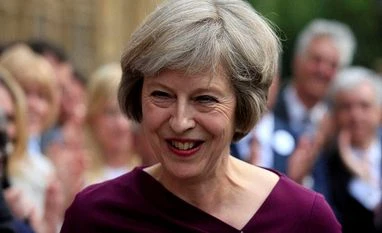 "May to replace Cameron as rival quits UK PM race")


 Connect with us on WhatsApp