
Some on Wall St try options trade to bet against AMC without getting burned
AMC's stock rose just over 83% this past week
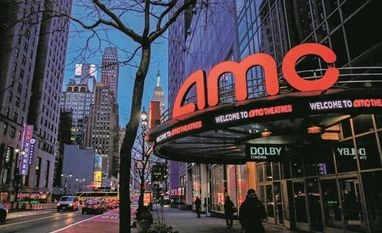 "Some on Wall St try options trade to bet against AMC without getting burned")
WebinarsNew
Deep DiveNew
Explore Business Standard
AMC's stock rose just over 83% this past week
Some Wall Street traders are betting against another massive rally in AMC Entertainment Holdings Inc and other "meme" stocks this week through a type of wager in the options market that would limit their losses should retail investors behind the run-up prove them wrong.
A Reuters analysis of options data and interviews with market participants, including a Wall Street banker and a fund manager with $30 billion in assets, show that some institutional investors have ramped up complex options trades that let them bet the shares will fall.
The so-called "bear put spread," a common bearish options strategy, also limits profits.
Its increased use now, which has not been previously reported, shows how Wall Street is looking for ways to profit off the unprecedented rise of retail trading but treading carefully after some high-profile funds got buffeted earlier this year.
"It's still dominated by these small retail trades for sure, but we are seeing sporadic big institutions tempted in just by the pricing," said Henry Schwartz, head of product intelligence at Cboe Global Markets Inc, referring to options trading in AMC.
AMC has been at the center of a second wave of buying by retail investors who have been hyping the stock in forums such as Reddit's WallStreetBets, giving new life to the "meme stock" phenomenon that sent shares of video game retailer GameStop Corp up 1,600% in January.
AMC's stock rose just over 83% this past week. The stock has surged 2,160% this year, leaving traders with outright bets against it nursing paper losses of nearly $4 billion, according to the latest available data from S3 Partners.
When a stock moves as much as AMC did last week - at times more than doubling in price in the course of a single trading session - it drives up the price of options.
Typically moves of that magnitude don't persist for extended periods of time, and some professional traders are betting that will be the case this time, meaning the stock price will fall, market participants said.
The problem is, they don't know when that might happen and whether they have the resources to stand their ground in an extended face-off with retail traders, whose power lies in their numbers.
That's where a bear put spread comes in. In the trading strategy, the investor buys one set of put contracts, which gives them the right to sell the underlying shares at a certain "strike" price by a certain time, and sells another set with a lower strike price valid for the same time frame.
The sale of the put options offsets most of the upfront cost of buying the first set of contracts. If the shares don't fall, or fall less than anticipated, the trader's losses from the put purchase will be covered to a large extent by the proceeds of the sold put.
The banker, a senior executive at a major Wall Street firm, said the majority of his institutional clients were staying away from meme stocks, but some had started using bearish put spreads to bet against them. The fund manager, who is based in New York, said he was using put spreads to both minimize his risk and reduce costs as he bet on AMC and other meme stocks.
Both requested anonymity because they were not authorized to speak to the press.
Options trading data shows increased complex trades that involve strategies such as put spreads. Such trades, typically favored by professional traders, made up 22% of daily AMC trades, on average, this week, up from 13% for the month of May, according to options analytics firm Trade Alert.
Overall options trading in the stock remains overwhelmingly driven by retail traders, the data shows. Only about 10% to 15% of overall daily AMC options volume this week was traded in blocks of over 100 contracts, a size typically associated with professional players.
"It's hard for institutions to stay away when volatility gets this high," Cboe's Schwartz said. "They try to avoid it, but it does draw them in."
(Additional reporting by Sinead Carew; Editing by Paritosh Bansal and Sonya Hepinstall)
(Only the headline and picture of this report may have been reworked by the Business Standard staff; the rest of the content is auto-generated from a syndicated feed.)
First Published: Jun 07 2021 | 3:45 PM IST


 Connect with us on WhatsApp