UK, EU mull stretching 21-month transition to clear last Brexit deal hurdle

As the U.K. and EU get closer to a deal, a public announcement on the outcome of the negotiations could be made Monday, says an EU official
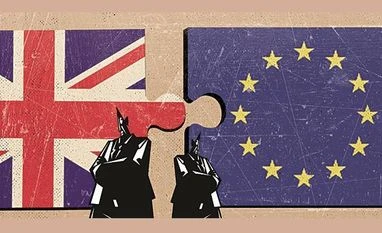
Brexit
Illustration by Ajay Mohanty
Ian Wishart | Bloomberg
Last Updated : Oct 13 2018 | 11:07 PM IST
UK and European Union officials are discussing a new proposal to solve the last major hurdle in Brexit talks and soothe the concerns of Prime Minister Theresa May’s Northern Irish allies, according to diplomats familiar with the situation.

Talks are stuck on the issue of the Irish border and a guarantee, or so-called backstop clause in the divorce treaty, which is proving impossible for May’s allies at home to accept. As the UK and EU get closer to a deal, a public announcement on the outcome of the negotiations could be made Monday, an EU official said.

The new proposal is to allow for the transition -- the 21-month grace period that’s due to kick in after Brexit day -- to be extended if needed. That would take the sting out of the Irish backstop by making it less likely that it would ever be invoked.

The UK government had no immediate comment.

May is closing in on a Brexit deal but her compromise over the Irish border is alienating two key groups she needs to keep onside. The Northern Irish Democratic Unionist Party objects to the Irish border solution as it will erect some barriers between the province and the rest of the UK Hardline Brexiteers object to it because it risks keeping the UK tied to EU rules indefinitely.

Arlene Foster, head of the DUP, on Saturday said in an op-ed that she will be in Dublin on Monday for meetings. On Friday, Foster said she met with DUP lawmakers who were “united behind our plan and united in standing firm not just for Northern Ireland but for the Union.”


‘Expensive Mistake’

The trouble with the new proposal is that while it would calm the fears of the DUP -- which props up May’s government -- it risks enraging pro-Brexit members of her party who only reluctantly agreed to any kind of transition in the first place.

The European Commission, which is carrying out the negotiations on behalf of the EU, told diplomats in a private meeting in Luxembourg on Friday that a deal was in sight and talks will continue over the weekend, an EU official said. If there’s progress, it could be announced publicly Monday, according to the official.

UK Brexit Secretary Dominic Raab is considering joining talks in Brussels on Monday, with the possibility of a news conference, a second official said.

Jacob Rees-Mogg, who leads a group of pro-Brexit lawmakers, told Bloomberg that extending transition would be an "expensive mistake," as it would tip the UK into contributing to the next seven-year cycle of the EU budget. Still, his language was less forceful than usual: He has described the transition period as a form of "purgatory" that turns Britain into a "vassal state."


Delicate Political Balance

Under current plans, the transition is to last through the end of 2020 after the UK’s departure from the bloc next March. It effectively keeps the country as a member of the EU in all but name but strips the UK of influence over decision-making. It is designed to give business some stability while the two sides negotiate a broader agreement on future economic and trading relations.

Negotiators are aiming to have an outline deal by next week so that leaders can sign off on a divorce treaty in mid-November. But May briefed her cabinet on Thursday and Brexiteers were not pleased. At least one is considering resigning, according to people familiar with the situation.
What’s the Deal?

It is unclear whether negotiators are considering specifying the length of the transition extension in the Brexit deal or whether it would just refer to the possibility of prolongation in future. The diplomats also cautioned that it is only one of several ideas under consideration to unblock talks.

A longer transition would be controversial for May at home. Pro-Brexit lawmakers who are keen to break free from EU rules were reluctant to agree to the grace period earlier this year. They could likely push back against any attempts to lengthen it. However, government officials have privately indicated for months that the transition period probably won’t be long enough.
 
(Updates wirth comment from Northern Ireland party in sixth paragraph.)

One subscription. Two world-class reads.

Already subscribed? Log in

Subscribe to read the full story →
*Subscribe to Business Standard digital and get complimentary access to The New York Times

Smart Quarterly

₹900

3 Months

₹300/Month

SAVE 25%

Smart Essential

₹2,700

1 Year

₹225/Month

SAVE 46%
*Complimentary New York Times access for the 2nd year will be given after 12 months

Super Saver

₹3,900

2 Years

₹162/Month

Subscribe

Renews automatically, cancel anytime

Here’s what’s included in our digital subscription plans

Exclusive premium stories online

  • Over 30 premium stories daily, handpicked by our editors

Complimentary Access to The New York Times

  • News, Games, Cooking, Audio, Wirecutter & The Athletic

Business Standard Epaper

  • Digital replica of our daily newspaper — with options to read, save, and share

Curated Newsletters

  • Insights on markets, finance, politics, tech, and more delivered to your inbox

Market Analysis & Investment Insights

  • In-depth market analysis & insights with access to The Smart Investor

Archives

  • Repository of articles and publications dating back to 1997

Ad-free Reading

  • Uninterrupted reading experience with no advertisements

Seamless Access Across All Devices

  • Access Business Standard across devices — mobile, tablet, or PC, via web or app

Next Story



