Zuckerberg questioned at trial over technology of virtual reality

He faced hours of tough public questioning about where Oculus obtained its ideas
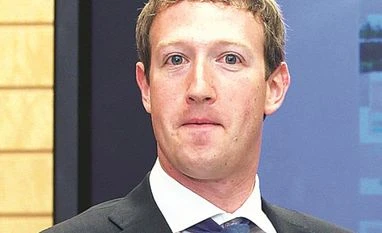
Facebook, Mark Zukerberg
Chief Executive Mark Zuckerberg has previously said he considers Facebook a technology entity but the social network has faced more questions over the past 18 months about how what it shows on its site affects its roughly 1.8 bn members
Lisa Maria Garza
Last Updated : Jan 19 2017 | 12:27 AM IST
Facebook chief executive Mark Zuckerberg took the witness stand in Dallas federal court on Tuesday and denied an allegation by a rival company that the virtual-reality technology of Facebook’s Oculus unit was stolen.

Zuckerberg, the founder of one of the world’s largest companies, faced hours of tough, public questioning about where Oculus obtained its ideas and how much he knew about the startup when Facebook bought it for $2 billion. 

A jury is hearing evidence in a civil lawsuit brought by video game publisher ZeniMax Media Inc against Oculus in 2014, in the middle of the Facebook-Oculus deal. ZeniMax said that Oculus unlawfully used its intellectual property to develop the virtual-reality system that includes the Rift headset.

During one heated exchange with ZeniMax lawyer Tony Sammi, Zuckerberg told a jury in the crowded courtroom that the technology was not even fully formed when Facebook bought it.

“Improving on that technology doesn’t make it yours,” Sammi countered. “If you steal my bike, paint it and put a bell on it, does that make it your bike?” Zuckerberg, wearing a dark suit and striped tie rather than his typical T-shirt and jeans, answered, “no,” but then added: “The idea that Oculus technology is based on someone else’s is just wrong.” The 32-year-old Facebook founder has spoken about virtual reality as an important part of the company’s future business, especially as the technology becomes less expensive and its uses clearer.

The Oculus acquisition was more expensive than the $2 billion price tag indicated, Zuckerberg said in court, describing $700 million spent to retain employees and $300 million in payouts for reaching milestones. Oculus originally wanted $4 billion, he said.

Sammi questioned whether Facebook knew what it was doing when it made the acquisition. 
Reuters

One subscription. Two world-class reads.

Already subscribed? Log in

Subscribe to read the full story →
*Subscribe to Business Standard digital and get complimentary access to The New York Times

Smart Quarterly

₹900

3 Months

₹300/Month

SAVE 25%

Smart Essential

₹2,700

1 Year

₹225/Month

SAVE 46%
*Complimentary New York Times access for the 2nd year will be given after 12 months

Super Saver

₹3,900

2 Years

₹162/Month

Subscribe

Renews automatically, cancel anytime

Here’s what’s included in our digital subscription plans

Exclusive premium stories online

  • Over 30 premium stories daily, handpicked by our editors

Complimentary Access to The New York Times

  • News, Games, Cooking, Audio, Wirecutter & The Athletic

Business Standard Epaper

  • Digital replica of our daily newspaper — with options to read, save, and share

Curated Newsletters

  • Insights on markets, finance, politics, tech, and more delivered to your inbox

Market Analysis & Investment Insights

  • In-depth market analysis & insights with access to The Smart Investor

Archives

  • Repository of articles and publications dating back to 1997

Ad-free Reading

  • Uninterrupted reading experience with no advertisements

Seamless Access Across All Devices

  • Access Business Standard across devices — mobile, tablet, or PC, via web or app

Next Story



