A four-year-old girl plucks petals off a daisy, counting as she does so. In her childlike way, she gets the order wrong: 5… 7… 6...The little girl's voice is abruptly replaced by a harsh male voiceover, counting down from 10. The picture of sweet innocence is interrupted by a nuclear explosion. As the characteristic mushroom cloud forms, we hear President Lyndon Johnson's voice: We must either love each other, or we must die.
This ad is credited with Lyndon Johnson's landslide victory over Barry Goldwater in the US Presidential elections of 1964. Created by DDB, the commercial ran only once. It was withdrawn because it implied that Johnson's opponent, if voted into power, would start a nuclear war. Thanks to the controversy, the ad was replayed over and over again by news channels and racked up huge numbers in what we would call 'earned media' today.
The 'Daisy Girl' TV spot is considered the first and most successful modern-day political ad. Certainly, no Indian political ad has been quite as powerful.
That said, Indian Elections 2014 have thrown up some interesting examples of political brand communication. It is a sign of the times that many of these are in the online space. The BJP's is the Twitter Raj, controlling conversations on social media. What is more, you can play Modi Run, if you are into gaming. And you can see a BJP banner on almost every webpage you open.
But knowing that not all its target audience is on the Internet, Modi-ji has innovated offline as well. A comic book of Bal Narendra's exploits is the cleverest idea. Given India's young - and at times uninformed - electorate, a romanticised version of NaMo's life in a pictorial format might just be the ticket.
Slogans, though old-fashioned, still work. In the 1970s, Indira Gandhi swept to power on
'Garibi Hatao'. And it seems as if this time
'Abki bar Modi sarkar' may well come true. The slogan has spawned a series of spoofs on social media, such as 'Twinkle twinkle little star,
abki baar Modi sarkar' to something more extreme. Whether positive or negative in tone, these spin-offs are a case of 'any publicity is good publicity'.
The AAP cap takes the cake as the single-most successful piece of branding in the political arena. The new party has taken the cliche of the Gandhi cap, added the slogan
'mein aam aadmi hoon' (nicked from the Congress) and created the best-selling piece of merchandising of Election 2014.
Apart from a few interesting jibes such as
'rajneeti nahin, kajneeti' - Congress' advertising has refrained from theatrics and ended up looking rather tepid.
More telling than the season's political advertising is the topical election-themed brand advertising: There's Tata Tea's long-running
'jaago re' campaign. It never disappoints. This time too, their
kaala teeka ad, encouraging women to vote, lives up to expectations. Then there's the ad that takes the mickey out of pretenders to the prime ministerial throne - and pretenders, in general -the 'no
ullubanawing' Idea Cellular campaign. And, most recently, there is the Fevicol 'crazy chairs' ad in which the carpenter makes a lotus-themed chair for Narendra-bhai, a 'handy' chair of adjustable height for the Congress party and cobbles mismatched chairs together for the Third Front.
I leave you with a poster I created, juxtaposing the Indian voting symbol with the Nazi swastika. It is a warning about the consequences of not voting wisely. Remembering President Johnson's message - 'We must either love each other, or we must die' - let us put the
kaala teeka to good use, not get
ullu banaowed (let's not get fooled) and put the right bums on seats of power to foster an environment of honesty, harmony, and happiness.
Pipe dream?
The author is executive creative director, South Asia, Ogilvy

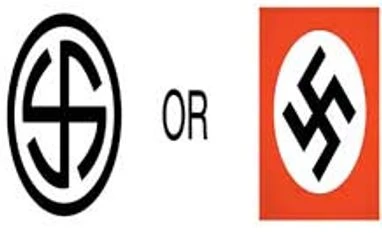 "Elections 2014 sees some interesting brand campaigns")


 Connect with us on WhatsApp