
It's hard to find a humble CEO. Here's why
Studies show that narcissists are particularly skilled at appearing charismatic at first sight
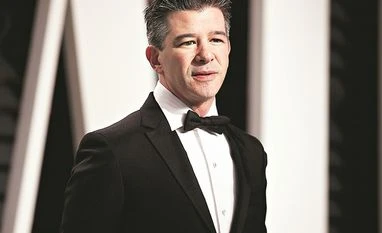 "It's hard to find a humble CEO. Here's why")
premium
Explore Business Standard
Studies show that narcissists are particularly skilled at appearing charismatic at first sight
Humility is the latest badge of virtue for those in positions of influence. From politicians, to executives, to chart-topping artists.
The idea of a humble CEO is a romantic departure from the greedy self-serving corporate hero. Rather, when faced with adversity, humble CEOs sacrifice their own interests for the greater good.
Studies echo the intuition that humble leaders are more modest, emotionally stable, and eager to learn. Unsurprisingly, they are less likely to display self-aggrandizing traits such as narcissism.
Perhaps most telling is the finding that companies and teams led by more humble individuals, perform better. But despite humility being good for business, it’s extremely difficult for CEOs to be genuinely humble.
Success culls humility
A distinctive strength of humble leaders is self-awareness – confidence in their abilities paired with accurate self-appraisal of their limitations. Yet, people often overestimate their virtues while underestimating their limitations.
For example, a recurring research finding is that people think they are better-than-average. Smarter, better looking, even superior drivers. CEOs are no exception, in fact they may be even more at risk of overestimating their strengths.
A key reason for this is that CEOs are – as a byproduct of their career success – highly confident. Whether the CEO climbs rungs of the corporate ladder or whether a celebrity CEO is parachuted in, they will have successfully out-competed other confident and capable people for the job.
The confidence that accrues with career success is important for leading an organisation. Yet, success is a mixed blessing. The same string of career wins may also lead CEOs to over-appraise their strengths without attributing the role of other factors, such as luck, in their achievements.
Such overconfidence can even harm organisations. Studies show that CEOs who overestimate their abilities tend to overpay for acquisitions, take undue risks, introduce more unsuccessful new products, and have more volatile firm performance.
Acting “like a CEO”
If finding an authentically humble CEO candidate is rare, looking at the personality profiles of people who want to be CEOs complicates matters further.
Research shows certain jobs attract people with specific personalities. Recruiters in turn rely on judgements, oftentimes subjective, of how a candidate’s personality will fit the job and the organisation.
CEOs tend to score higher than the general population on personality attributes such achievement-orientation, ambition, assertiveness, and risk-preference. Individuals with some, or a combination, of these traits may be particularly adept at pretending to fit ideal criteria for a specific role.
For instance, studies show that narcissists are particularly skilled at appearing charismatic at first sight. Charisma, in turn, has long been considered a desirable feature of CEOs. CEOs perceived as charismatic, accordingly, receive higher pay.
Genuine humility may thus be a scarce personality feature among candidates for CEO positions.
Hurdles to leading with humility
Humble CEOs emphasise leadership as a shared activity and actively seek advice from others. Although this might work for more considered and analytical decisions, it may come at the cost of speed.
High-performing firms are often characterised by an ability to make decisions quickly. In fact, some evidence suggests that more narcissistic CEOs may be quicker in making judgement calls, for instance, about adopting new technologies.
CEOs are also expected to provide precise forecasts of an uncertain future. However, managers often engage in herd behavior in the face of uncertainty, and firms often end up imitating each other. By virtue of their self-awareness, humble CEOs can be expected to issue more realistic expectations that may deviate from collective overoptimism.
However, analysts tend to rate optimistic forecasts more favourably. As such, humble CEOs may be penalised for conveying more conservative, albeit more realistic, forecasts.
Some research suggests that accomplished professionals could potentially become more self aware in the later stages of their career. If this is the case, then some CEOs may become more humble as they get closer to retirement.
However, the purported benefits of age and experience may be offset by other tendencies that emerge during later career phases. For instance, CEOs closer to retirement have a natural tendency to reduce investments in innovation and those with longer tenures tend to be overly averse to change.
Equipping organisations with the right leadership attributes is crucial for success. Humility is a precious, but rare, commodity in the executive suite.
Staying genuinely humble through progressive stages of high achievement is difficult for CEOs. Those who are authentically humble, in turn, face distinct challenges that may trump the benefits of their humility.
Humility is at risk of becoming the latest leadership buzzword. Organisations that manage to find an authentically humble CEO, however, may just have an edge.
Mariano L.M. Heyden, Associate Professor of Strategy & International Business, Monash University and Mathew Hayward, Professor Entrepreneurship and Strategy, Monash University
This article was originally published on The Conversation. Read the original article.
Already subscribed? Log in
Subscribe to read the full story →

3 Months
₹300/Month
1 Year
₹225/Month
2 Years
₹162/Month
Renews automatically, cancel anytime

Over 30 premium stories daily, handpicked by our editors


News, Games, Cooking, Audio, Wirecutter & The Athletic
Digital replica of our daily newspaper — with options to read, save, and share


Insights on markets, finance, politics, tech, and more delivered to your inbox
In-depth market analysis & insights with access to The Smart Investor


Repository of articles and publications dating back to 1997
Uninterrupted reading experience with no advertisements


Access Business Standard across devices — mobile, tablet, or PC, via web or app
First Published: Aug 22 2017 | 11:22 AM IST


