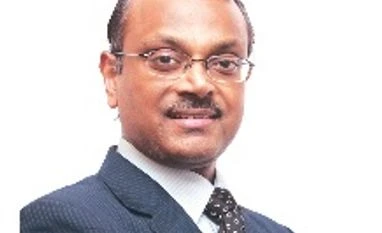
Portfolio inflows could cross $40 bn this year: Ananth Narayan
Q&A with Regional Head- Financial markets, South Asia, Standard Chartered
Sheetal Agarwal Mumbai Ananth Narayan, Regional Head- Financial markets, South Asia, Standard Chartered, believes Indian stock markets are in for a structural bull run. In conversation with Sheetal Agarwal, he says that India has sufficient foreign reserves to support the rupee even during the turmoil in Iraq and that infrastructure reforms are key to solving most of India's macro economic issues. Edited Excerpts:
What are your must haves for the upcoming Union Budget? We do not expect any big bang announcements in the Budget. However, it should focus on improving fiscal deficit and also lay a road map on specific steps to be taken in the direction of boosting infrastructure investments.
What will be the impact of current tensions in Iraq on the INR? One cannot plan for such developments. However, all domestic factors are very positive for India currently and we are a lot better prepared from forex and reserves perspective. We should see a stable INR, buoyed by investment inflows. We could see portfolio inflows this year cross the 2010 levels of $ 40 billion. We do not think INR will appreciate beyond 58 level. Likewise, we think it is unlikely that INR will depreciate beyond 62, barring a secular strengthening of US Dollar globally. Given that interest rate differentials dictate that USD-INR should be at 65 in a year’s time, a stable INR is actually an appreciating INR.
What are your expectations from monetary policy in FY15? We would like monetary policy to incentivise investments over consumption. Reviving infrastructure and the investment cycle can effectively address inflation, low growth, balance sheet stresses and the twin deficits in the long run. Priority sector status for incremental infrastructure lending, directing primary liquidity into infrastructure, allowing banks to competitively raise tenor funds to fund infra could be a few means to implement this. We think actual direction of broad brush monetary policy rates will be very data and event dependent. As a base case, we expect the repo rate to hold steady at 8% for the rest of 2015, with the data dependent possibility of a rate cut in first half of 2015.
What strategy should one adopt in current equity and debt markets? With a business, investment and infrastructure friendly government at the helm, enjoying a stable majority of its own, this is India's best opportunity in years for the start of a sustainable investment cycle. We think this could be the start of structural change in India’s infrastructure, ease of doing business, employment and growth. We would look at a base case of double digit annual growth in India’s equity markets over the next few years. We have a target of 30,000 for the Sensex in 2014. Of course, there could be minor corrections along the way but we remain positive on the markets from a medium to long term perspective.
The trajectory of interest rates is less certain or directional in the long term - particularly if domestic growth picks up. However, 8.5% five year government bond yields in India, with the outlook of a relatively stable rupee, is clearly attractive to overseas investors. At this point, interest rates seem relatively high - 9% plus returns from high quality local borrowers looks an attractive low risk return.
Given that monsoon is likely to be sub-normal this year, what will be the impact on inflation, growth? As was seen in 2002, it is possible to control inflation even in the wake of a failed monsoon. India does have a buffer stock of grains available. While the prices of perishables such as fruits and vegetables are less easy to control, a mix of strict control on hoarding, removing procurement inefficiencies, timely imports and improving the supply chain can all contribute to managing food inflation. A lot therefore depends on how the administration responds to the situation.
Your expectations on India's GDP growth this fiscal? What would be 2-3 key measures required to boost manufacturing growth? The actual recovery in GDP growth could take a while - this year’s fiscal number should be around the 5.5% mark. However, we believe this is the best opportunity that we have had in years to reach for a sustainable 8% growth rate again, perhaps in two or three years time.
The three key measures required to boost growth are - infrastructure, infrastructure and infrastructure. Reviving stalled infra projects, spurring a fresh investment cycle, creating capacity in power, roads, ports, warehousing and storage etc. - this has to be the easiest path to spurring manufacturing and exports. While China is trying to spur domestic consumption and utilisation of existing capacity, we should be looking to incentivise manufacturing capacity and infrastructure.

 "Portfolio inflows could cross $40 bn this year: Ananth Narayan")


 Connect with us on WhatsApp