
LS polls 2019: In India, CEO Jack Dorsey says Twitter fighting fake news
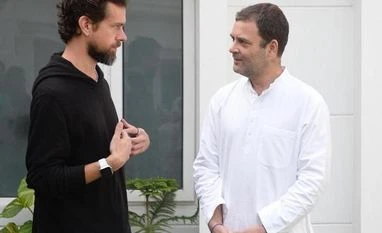
The Twitter CEO met Congress President Rahul Gandhi and discussed various steps the social network was taking to curb the spread of fake news
 "LS polls 2019: In India, CEO Jack Dorsey says Twitter fighting fake news")
WebinarsNew
Deep DiveNew
Explore Business Standard
The Twitter CEO met Congress President Rahul Gandhi and discussed various steps the social network was taking to curb the spread of fake news
Twitter is taking "multi-variable" steps, including the use of Artificial Intelligence (AI) tools, to curb the spread of misleading information on its platform ahead of 2019 general election in India, Co-Founder and CEO Jack Dorsey said here on Monday.
Addressing a Town Hall-style meeting at the Indian Institute of Technology-Delhi (IIT-D), Dorsey said fake news is a way too big category.
"The real problem is not misinformation per se as jokes can also be categorised as misinfomation. But misinformation that is spread with the intent to mislead people is a real problem," stressed the Twitter CEO who is in India on a week-long maiden visit.
Dorsey, who got a rousing reception at IIT-D with the students wildly cheering the young entrepreneur, likened solving the problem of misleading information to that of addressing a security issue, or building a lock.
"No one can build a perfect lock, but we need to stay ahead of our attackers. AI could probably help," Dorsey told the audience.
Earlier in the day, the Twitter CEO met Congress President Rahul Gandhi and discussed various steps the social network was taking to curb the spread of fake news and boost healthy conversation on its platform.
Dorsey also met Tibetan spiritual leader the Dalai Lama over the weekend. He was also expected to meet Union IT Minister Ravi Shankar Prasad in the wake of the growing criticism over Twitter's role in the spread of misinformation and fake news as India faces Assembly polls in five states in November-December ahead of next year's general elections.
Twitter, along with other social media platforms, including Facebook, came under intense scrutiny of policymakers in the US for their failure to stop the spread of misinformation by Russia-linked accounts on their platforms during the 2016 Presidential election.
The micro-blogging site since then has stepped up its efforts to curb the spread of divisive messages and fake news on its platform.
To further protect the integrity of elections, Twitter recently announced that it would now delete fake accounts engaged in a variety of emergent, malicious behaviour.
As part of the new rules, accounts that deliberately mimic or are intended to replace accounts that were previously suspended for violating rules may be identified as fake accounts, Twitter said recently.
However, according to a Knight Foundation study released in October, more than 80 per cent of the Twitter accounts linked to spread of disinformation during the 2016 US election are still active.
First Published: Nov 12 2018 | 3:08 PM IST


 Connect with us on WhatsApp