But direct income support for farmers tough to implement
premium
The RSS-backed trade union said that NITI Aayog's proposal to create a new category of “fixed term employment” in the organised sector will destroy quality jobs.
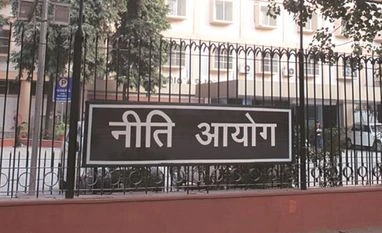
The NITI (National Institution for Transforming India) Aayog has recommended direct income support of Rs 15,000 per hectare per annum to farmers. To prevent this from becoming a fiscal nightmare, the Aayog has suggested scrapping all subsidies for agriculture, including fertiliser, electricity, crop insurance, irrigation and interest subvention, and transfer an estimated saving of around Rs 2 trillion directly to farmers. There are two reasons why this proposal makes sense. One, the existing subsidies are often inefficiently disbursed and a direct transfer to a farmer’s account will be a more efficient alternative. The other reason is that unlike minimum support prices, a direct income support does not accentuate market distortions and the associated efficiency losses. This method is far more acceptable globally and in line with the demands of the World Trade Organization, apart from being more inclusive and equitable.
There is also growing evidence that such direct income support schemes may also provide rich political dividends. A case in point is the stellar success of the Rythu Bandhu scheme, promoted by Telangana Chief Minister K Chandrasekhar Rao. Telangana has a higher proportion of workforce in agriculture than the national average. Much like other states, it too was in the habit of giving a whole host of subsidies and farm loan waivers. Rythu Bandhu provides all farm owners Rs 4,000 per acre of land owned. In the case of double cropping land, this transfer was doubled. The scheme played a leading role in the Telangana Rashtra Samithi winning the elections with a huge mandate. There were two key aspects of this scheme. One, these transfers did not come at the cost of existing subsidies. Two, by design, it benefitted land owners and left out landless labourers. Odisha is another state that is proposing to use this template, albeit with some tweaking. The KALIA (Krushak Assistance for Livelihood and Income Assistance) scheme in Odisha provides Rs 5,000 per acre per season to all small and marginal farmers as well as tenants and share-croppers.
However, there is one huge hurdle that targeted income support schemes face in India. That has to do with the political reality of the problem in rolling back existing subsidies. An income support scheme can work efficiently only if all such subsidies are withdrawn. Given the acute poverty in India as well as the reluctance of politicians to do away with existing subsidies, it is more likely that an income support scheme will only be in addition to the existing subsidies. That leads to the question of the financial viability of any such scheme. Governments, both at the Centre and in the states, are stretched and it is likely that targets of fiscal deficits and overall public debt to gross domestic product will not be met. The other drawback of the scheme is that India does not have digitised land records and without them the scheme is almost impossible to implement. While the debate goes on, the government should rather think of alternatives such as investment in marketing infrastructure, storage and food processing, allowing direct purchases from farmer producer organisations instead of requiring farmers to sell their produce at registered markets.
Read this article for free
Register to continue reading premium journalism and analysis from Business Standard.

 "Good on paper")












 Connect with us on WhatsApp