5 min read Last Updated : Sep 26 2019 | 8:32 PM IST
Don't want to miss the best from Business Standard?
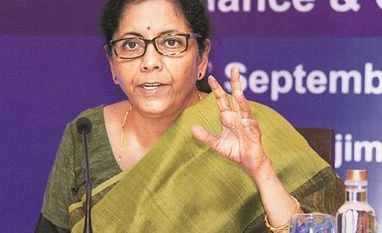
Finance Minister Nirmala Sitharaman announced that public sector banks will put up shamianas (colourful tents) in 400 districts to provide loans to retail, agriculture and SMEs. The policy was initiated to fight the slowdown but has brought back memories of similar loan melas from 1980s. These melas not just got Indian banks in serious trouble but also created a highly reckless credit culture in India whose effects continue till date.
In 1982, Prime Minister Indira Gandhi appointed Janardhan Poojary as Minister of Finance for state. The PM had nationalised 20 banks but was unhappy with their progress in rural India and asked Poojary to look into the matter. RBI History volume 4 (1981-97) notes that the trickle-down theory was not working and there was a need to target and prioritise credit to the vulnerable sections for a more just distribution.
Poojary narrates how he decided to tour bank branches in disguise (https://janardhanapoojary.com/loan-mela-a-revolution/). He observed that the poor were ignored not just for bank services but also for loans. On being asked why, the bankers gave the age old reply that the poor did not pay back loans. The minister argued that it was large corporates that were behind most of the unpaid loans and the poor had a better track record for paying back loans.
Poojary then developed the idea of loan melas (which he called “revolutionary”) where the banks were pushed into giving uncollateralised loans up to Rs 5,000. He ordered all the bank chairpersons to be present at the melas which were conducted across the country. His phone calls had to be answered by the bankers, irrespective of the time of the call.
The loan mela met with a lot of criticism (and threats) from not just bank unions but also sections of media and rival politicians. M V Kamath wrote (Indian Post, December 30, 1987) that “loan melas threatened to cripple the Indian banking system” and the lavish public expenditure was gross abuse of trusteeship of banks. Karnataka’s Janata Party president, M P Prakash asked the PM and the RBI to postpone the proposed loan mela in Bengaluru, or face a massive confrontation (The Patriot, December 3, 1987, Patriot). In another case, the Tripura CPI (M) deemed loan melas as bribing voters ahead of the legislative assembly elections (The Telegraph, December 24, 1987). An Economic and Political Weekly piece (July 1987) noted that (then) PM Rajiv Gandhi could not stop the loan mela spree, as he himself inaugurated the first loan mela before becoming the PM!
Kamath (and other critics) were proven right. RBI’s Currency and Finance Report (2006-08) points the return on assets of nationalised banks declined from 0.56 per cent in 1980 to just 0.15 per cent in 1990. Most of the other banking indicators indicated a crisis. There were other factors apart from loan melas such as administered interest rate regime, other directed credit programmes etc, that played a role in the crisis.
One cannot justify irresponsible loans to lower income people based on the assumption that it is large industries that do not repay loans. Two wrongs do not make a right! These policy interventions abuse the market discipline in a much larger way over time. The RBI History points that these targeted programmes “generated a feeling among borrowers that they did not need to worry about discharging their debt” and loans were given to those with political backing and waived-off “especially on the eve of elections”.
The teething problems of the industry finally merged with the 1991 crisis and ushered in the subsequent reforms in the overall economy including the banking sector. Having said that, despite 25 years of reforms, some of the banking legacies of the earlier era continue even today such as debt waivers before elections, politicisation of the banking system, role of small borrowers versus big borrowers in NPAs and so on.
It is not clear why the government has taken a leaf from the loan mela book of the 1980s when banks are already suffering from high NPAs. Moreover, the government wants to signal that it is cleaning up the banking system but this move indicates just the opposite.
I want to end with some banking history. Poojary hailed from South Canara region which saw the emergence of five banks (Canara, Corporation, Syndicate, Vijaya and Karnataka). These banks showed one can provide loans to the poor without any push from the state and yet grow into large and profitable banks. Yet, the government first nationalised these banks and has now reduced them to just two in the recent spate of bank mergers. The history of Indian banking could have been very different if our politicians had heeded lessons from the South Canara banks. But we continue to look at history of a different kind.
Disclaimer: These are personal views of the writer. They do not necessarily reflect the opinion of www.business-standard.com or the Business Standard newspaper