The surgical strike may have been in space but its obvious targets were opposition parties on earth. But for me Narendra Modi’s excruciatingly prolonged drama recalled George Verghese’s editorial “Kanchenjunga, Here We Come” in the Hindustan Times when Indira Gandhi’s government was about to gobble up the Himalayan kingdom of Sikkim. “Perhaps there is no need for the common man to ask for bread”, the article concluded with exquisite irony. “He’s getting Sikkim.”
Mission Shakti is probably a tremendous technological achievement and the scientists responsible for it deserve full praise. But it is no more relevant to the basic needs of Indians languishing below the poverty line than the annexation of Sikkim was all those years ago. “We are not just capable of defending (our country) on land, water and air, but now also in space,” Mr Modi boasted. Since he had already told us that three other nations - the United States, Russia and China -- already had the capability we seem to have acquired in the midst of a hectic election campaign, I cannot but wonder which of the three countries we must beware of. Not the US or Russia, surely? As for China, I remember a bewildered Deng Xiaoping telling Henry Kissinger that not only was Sikkim “entirely under the military control of India” before the annexation, but that India had “in no way strengthened” its forces there afterwards. “We don’t fear that India will attack our borders,” Deng added. If India won’t do so down here, it isn’t likely to do so up there.
Mr Modi’s Pradhan Mantri Kisan Samman Nidhi scheme and Rahul Gandhi’s Nyuntam Aay Yojana are more relevant than extravagant, expensive, sophisticated space technology to the daily needs of India’s poor. But who are the poor? Commonsense indicates they amount to far more than the official admission of 20 per cent of the population. The former Reserve Bank governor, Raghuram Rajan, casts doubt on the reliability of GDP data. Ordinary Indians can’t believe that a prime minister whose waistcoats are almost as fancy as Nirav Modi’s ostrich skin jacket really is a “fakir” who can pick up his “jhola” and disappear, as he says. We are reminded of the jibe that Indira Gandhi’s rallying cry should have been “garib hatao” and not “garibi hatao”.
Her grandson intoned in commanding tones the other day, “We can’t have two Hindustans, of the poor and the rich”. Of course we can’t. India’s variety and diversity can’t be reduced to two bald categories. Identities and vocations overlap. Caste can contradict class. Since a chaiwalla calls himself chowkidar - the prefix was flaunted like the Chaudhury title on the note announcing Wednesday’s not-so-earth-shattering announcement - so can the Harvard don that a touchy Brahmin like Subramanian Swamy is proud of having been before immersing himself in India’s byzantine politics. If the present prime minister’s chowkidar handle is not good enough for the Rajya Sabha member, he can fall back on the pandit to which India’s first prime minister developed an aversion even before Britain’s imperialist Daily Express took to calling him “Bandit Nehru”.
But Dr Swamy errs in believing brahmins are too superior to be chowkidars. Brahmins are men of all seasons. A Bihar politician commented wryly during the Mithila agitation for separate statehood that for all their ancient scholarship, Maithili brahmins had become known in modern times as cooks in Bengali households. His colleague added that even if Maithili brahmins did cook for Bengali families, they maintained their distinctive status by not partaking of any food cooked by their employers. That’s snobbishness for you.
The British understood the subtleties of our interaction of caste and class even better than we did. The Tory politician, Michael Heseltine, who challenged Margaret Thatcher for the top slot, was once subjected to a patrician put-down: another Tory sniffed he had “bought all his own furniture...” instead of inheriting it. That’s why the colonial regime inserted an Intermediate class between First and Second (or was it Second and Third?) on railway trains. It was for the well-born poor like the Karnataka brahmins who pleaded with B.P. Mandal for OBC status. Of course, the Bharatiya Janata Party’s now deposed and exiled grandees who preferred to rumble along in a rath or a DCM-Toyota van know nothing of trains. But the chaiwalla turned chowkidar who organised Murli Manohar Joshi’s Ekta Yatra from Kanniyakumari to Kashmir can’t have forgotten his tour operating stint. Like the Maithili brahmin cook, he is getting his own back now.

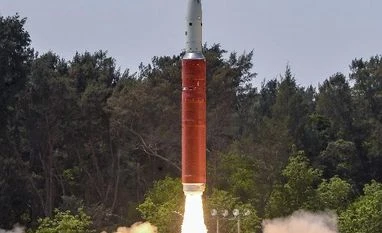 "Mission Shakti: Winners & losers")












 Connect with us on WhatsApp