3 min read Last Updated : Nov 18 2021 | 11:03 PM IST
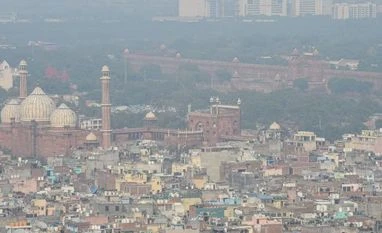
Air pollution in the National Capital Region (NCR) has gone from bad to worse. All schools and colleges have been shut, some government workers have been moved to working from home, and only five of the 11 coal-fired thermal power plants close to the city are still operating. Construction has also been shut down for the week. As usual, various authorities responsible for the NCR and neighbouring areas are blaming each other — to the extent that the Supreme Court has complained about “bureaucratic inertia”.
The problems that lead to Delhi having the worst air quality in the world at the onset of winter are well understood. Large numbers of unshielded construction sites, vehicular traffic that is frequently snarled up in traffic and includes some vehicles that have evaded or are not subject to the strictest pollution controls, crop stubble burning in neighbouring agricultural states, and adverse wind patterns all work together to create an annual crisis. It is unsurprising that this is a complex problem to solve, because the smog in the area has many sources and the region has multiple overlapping authorities. Yet there is still no reason for killing air to recur in the NCR year after year; it reveals a failure of leadership above all.
Given that this requires co-ordination across multiple authorities, it is the Union government that must fill this deficit in leadership. It is unfortunate that most of the authorities — from the municipal corporations to the state government of Delhi to the governments of the neighbouring states to the relevant line ministries at the Union level — are spending time on blaming each other and moving the Supreme Court; they should instead be seeking an institutional mechanism to ensure co-ordination on the outstanding problems. The Commission for Air Quality Management (CAQM) in the National Capital Region and Adjoining Areas has been created by successive Ordinances over the past year, replacing the NCR’s previous Environment Pollution Prevention and Control Authority. Yet it is clear that the new Commission is already struggling, as it is dominated by bureaucrats and is being seen as an appendage of the Union government rather than as an inclusive body. Several of its recommendations have been honoured by various agencies but in the end the government has resorted to hoping that the weather patterns will change next week and clear some of the smog from Delhi.
The problem is that the CAQM’s recommendations do not view the area in a holistic sense. There is no point imposing, say, a lockdown in Delhi if the suburbs in neighbouring states operate as normal. There is no point shutting down thermal power plants in Delhi while the giant ones in Gautam Buddha Nagar and elsewhere continue to operate as normal. Particulate matter does not respect state boundaries in the manner the CAQM seems to think. Whatever solutions are found must be grounded in scientific analysis — given that there are multiple years of data and several studies on the subject to evaluate — and must also be applicable uniformly over the entire sub-region subject to the specific weather pattern holding the smog in place. This will certainly require the co-operation of state governments, but that is where political leadership comes in. If the problem is addressed equitably and rationally, through a comprehensive and sustainable plan, and by a body seen as representative and inclusive, then the incentive to play politics with Delhi’s air will vanish.