Though the word polarisation is mostly linked with the right-wing religion-centric politics, yesterday's results of elections to Brihanmumbai Municipal Corporation here showed polarisation along linguistic lines between the two right-wing parties, Shiv Sena and BJP, themselves.
Sena and BJP, the bickering alliance partners in Maharashtra who fought the civic elections separately, seemed to have divided the voters on regional or linguistic lines, going by the voting patterns, a BJP leader said.
Lower middle class and the working class among Marathi-speakers voted largely for Shiv Sena, while the upper middle class and areas with a large number of Gujarati-speakers and North Indians voted for BJP, the voting patterns show, said Soumen Mukherjee, co-convener of BJP's media cell.
Also, the 'old Mumbai' city seemed to have supported Shiv Sena, while BJP, which attained its highest-ever tally by winning 82 out of 227 seats, only two less than the Sena, gained more in suburbs, especially the western ones.
"The polarisation has taken place over the linguistic base. Non-Marathi speaking voters have largely voted for BJP. On the other hand, the old city areas have voted Shiv Sena because of its strong network of party workers developed over the last so many years," Mukharjee told PTI.
As per the data given by the State Election Commission, of the 114 seats in the western suburbs from Bandra to Dahisar, which have a sizable population of North Indians and Gujarati-speakers, BJP won 52 and Sena 38.
The exception to this pattern was Bandra East, where Shiv Sena chief Uddhav Thackeray lives. BJP did not win a single seat here, while the Sena won five and AIMIM won remaining one seat.
A Sena leader pointed out, speaking on the condition of anonymity, that though Mumbai BJP chief Ashish Shelar represents the Bandra constituency in the state Assembly, in the BMC elections his party drew a blank in the area.
The eastern suburbs had a neck-to-neck contest between BJP and Sena. Of the 57 seats, Shiv Sena won 18 and BJP 17. Rest went to NCP, Congress and others.
However, the exception was the suburban Mulund area, a stronghold of BJP MP Kirit Somaiya who had targeted the Sena leadership aggressively during the campaign. In Mulund, which has a sizable Gujarati-speaking population, BJP won all the six seats.
In old Mumbai, which has slums, tenements (chawls) and old 'waadis' (old one-two storey settlements), Sena had an upper hand. Out of 56 seats, it won 28, while BJP won 13, Congress 11, MNS two, SP one and Akhil Bhartiya Sena one. This area comprises Sion-Koliwada, Wadala, Dharavi, Mahim, Worli, Shivdi, Byculla, Mumbadevi, Malbar Hill and Colaba.
BJP did not win a single seat in Dharavi, known as Asia's largest slum area, Worli and Shivdi.
"Sena's appeal to 'sons of soil' (native Maharashtrians) received a good response in the Mumbai city area. On the other hand, BJP's plank of development and transparency was appreciated by western and eastern suburbs," Mukharjee said.

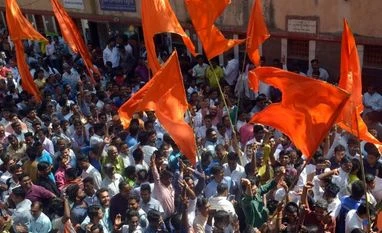 "BMC poll results reveal linguistic polarisation: BJP leader")


 Connect with us on WhatsApp