Britain, Sweden should accept Julian Assange ruling: UN rights chief
A UN panel ruled that Assange had been subjected to arbitrary detention by the Swedish and British governments
AFPPTI Colombo The UN human rights chief said on a visit to Sri Lanka today that Britain and Sweden should accept the findings of one of his panels that WikiLeaks founder Julian Assange had been arbitrarily detained.
Last week, the UN Working Group on Arbitrary Detention issued its conclusion -- a non-binding legal opinion -- that Assange had been subjected to arbitrary detention by the Swedish and British governments.
Britain and Sweden angrily rejected the panel's recommendations that Assange be allowed to walk free from Ecuador's London embassy, where he sought refuge in 2012 and be offered compensation.
Speaking in Colombo, Zeid Ra'ad Al Hussein said the Working Group, although not a court, based its decision on binding international law and that Britain and Sweden should therefore abide by its findings.
"Human rights law, the treaty body law is binding law, it is not discretionary law, it is not some passing fancy that a state can apply sometimes and not in the others," Zeid, the UN High Commissioner for Human Rights, told reporters at the end of a four-day visit.
A spokesman for Zeid said the panel based its decision on the International Covenant on Civil and Political Rights.
"If there are further court cases on Assange, you are likely to see the Working Group's opinion cited in the court, and quite possibly in the judgement," spokesman Rupert Colville said.
Britain and Sweden sharply condemned the panel's findings and said they would change nothing.
Britain's Foreign Secretary Philip Hammond called the panel's opinion "ridiculous" describing Assange as "a fugitive from justice".
Zeid told reporters that he had been tied up with his visit to Sri Lanka and so had not had time to examine the British and Swedish reactions to the panel's bombshell report.
"I have not had the required time to actually read the reactions of the states (Britain and Sweden) and at some stage soon I will comment," he said.
Assange walked into the Ecuador embassy in June 2012 to avoid the threat of arrest and extradition to Sweden, where he still faces a rape allegation.
He has lived there ever since in a small office room with a bed, computer, sun lamp, treadmill and access to a small balcony.

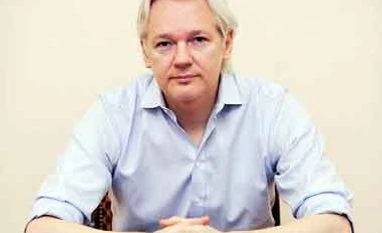 "Britain, Sweden should accept Julian Assange ruling: UN rights chief")


 Connect with us on WhatsApp