Customs clearances to get paperless from 2017
CBEC's SWIFT mechanism replaces nine separate documents with one common electronic declaration
Press Trust of India Mumbai Imports will become easier from the next year as the CBEC is planning to go paperless and move towards a completely integrated customs system for facilitating documentation and fast-tracking clearances of consignments.
The Central Board of Excise and Customs (CBEC) is planning to rope in more government agencies under its SWIFT mechanism, which replaces nine separate documents with one common electronic declaration.
"In another six months, we are planning to go completely electronic for customs clearance by doing away with requirement of any physical documents. We are planning to create a web repository," Additional Director General (Customs) S K Vimalanathan said.
The CBEC had, on April 1, launched a single-point interface SWIFT for clearance of imports to facilitate trade by reducing the dwell time. About 10 lakh documents have been processed till June 1,2016.
"Importers still need to show physical copies of various documents like analytical certificates. We are working on enabling importers to scan and upload those documents in a PDF format and this will be made available to customs officer as a link," Vimalanathan said.
The CBEC will float a 'Request For Proposal' within three months inviting IT companies to integrate the customs system which currently uses three softwares for faster clearance of goods.
"With the Integrated Customs System, the document processing time will come down to less than 10 seconds from more than 10 minutes now," Vimalanathan said.
The CBEC has substantially brought down the documentation requirements and now importer are required to file only three documents -- Declaration of Goods, Invoice and packing list -- at the time of Bill of Entry. Earlier, importers had to file 18 such documents.
The SWIFT clearance mechanism brings in six government agencies -- FSSAI, plant quarantine, animal quarantine, drug controller, wild life controller bureau and textiles committee -- on a single platform. This has eliminated need for importers to interact separately with these agencies.
"We are working on non-intrusive ways for clearance of goods. We are talking to more agencies to come under the SWIFT platform for ensuring faster clearance of goods," Chief Commissioner (Customs) Rajeev Tandon said.
In order to ensure efficient facilitation through Risk Management System (RMS), Tandon said the Customs departments keeps tweaking them as per global scenario.
RMS is a process through which Customs officials can single out suspicious cargo based on various risk parameters like items, country of origin, importer's track record. This reduces time as customs officials do not need to carry out manual checks on each cargo.

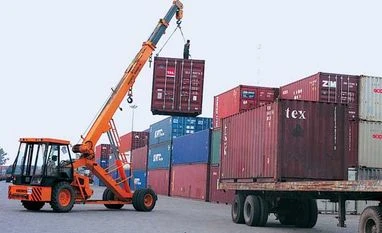 "Customs clearances to get paperless from 2017")


 Connect with us on WhatsApp