
Dust from West Asia on Tibetan plateau affects Indian summer monsoon: Study
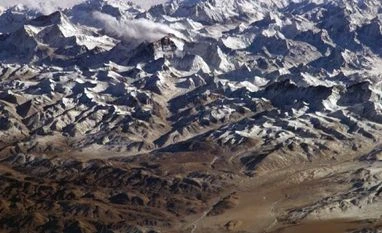
Airborne particles such as dust and soot that absorb sunlight settle on top of Tibetan Plateau's snowpack in spring before the monsoons begin
 "Dust from West Asia on Tibetan plateau affects Indian summer monsoon: Study")
WebinarsNew
Deep DiveNew
Explore Business Standard
Airborne particles such as dust and soot that absorb sunlight settle on top of Tibetan Plateau's snowpack in spring before the monsoons begin
Dust and soot transported from the deserts of the West Asia (Middle East) settle on the snow cover of the Himalaya mountain range and affect the intensity of the summer monsoon in India, a study has found.
Using a powerful Nasa-developed atmospheric model, researchers from the University of Maryland in the US found that large quantities of dark aerosols -- airborne particles such as dust and soot that absorb sunlight -- settle on top of the Tibetan Plateau's snowpack in spring before the monsoons begin.
These dark aerosols cause the snow to absorb more sunlight and melt more quickly. The findings suggest that, among these dark aerosols, windblown dust from West Asia (Middle East) has the most powerful snow-darkening effect.
In years with heavy springtime dust deposition, the end result is reduced snow cover across the Tibetan Plateau, which leads to warmer temperatures on the ground and in the air above it.
This, in turn, sets off a series of interconnected feedback loops that intensify India's summer monsoon.
More than a century ago, British meteorologist Henry Blanford noted a connection between springtime Himalaya snow cover and the intensity Indian monsoons.
Hundreds of studies have supported this relationship since Blanford first published his hypothesis in 1884.
But so far, researchers have struggled to explain why this connection between snow cover and monsoon intensity exists.
"Blanford knew that snow cover on the Tibetan Plateau wasn't the only phenomenon that influenced the monsoon, but he knew it was important," said William Lau, a research scientist who led the study.
"The relationship between snow cover and the monsoon is useful enough that the India Meteorological Department still uses it to develop its annual summer monsoon forecast," Lau said.
"By adding knowledge of the physical mechanism responsible for this relationship, our study may help to develop more accurate monsoon forecasts," he said.
Researchers used the Goddard Earth Observing System Model to simulate 100 years' worth of springtime snow cover and its influence on the yearly summer monsoon cycle.
To test the effect of dust blown in from West Asia (Middle East), the researchers ran the same simulations again, with an added software package that incorporates the snow-darkening effects of dust, soot and other dark aerosols deposited atop the Tibetan Plateau.
Adding dark aerosol deposition to the model substantially increased the amount of sunlight absorbed by the snow, accelerating the rate of melting.
This is because when the snow melts, it begins to expose the darker ground underneath, which absorbs even more sunlight and intensifies the rate of melting.
The timing of the dust's arrival was also important. Researchers found that the strongest effect in cycles when a large amount of dust settled on the snowpack in April, May and June.
First Published: Nov 15 2018 | 2:20 PM IST


 Connect with us on WhatsApp