
AstraZeneca's first vaccine dose cuts Covid transmission by 67%: Study
The UK government described this as good news for the world because the impact of COVID vaccines on transmission has been a crucial unknown in the fight against the pandemic
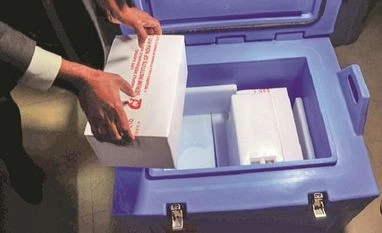 "AstraZeneca's first vaccine dose cuts Covid transmission by 67%: Study")
WebinarsNew
Deep DiveNew
Explore Business Standard
The UK government described this as good news for the world because the impact of COVID vaccines on transmission has been a crucial unknown in the fight against the pandemic
Even just the first of the two-dose Oxford/AstraZeneca vaccine can cut coronavirus transmissions by around 67 per cent and therefore have a "substantial effect" on controlling the spread of the deadly virus, according to a new Oxford University study on Wednesday.
The UK government described this as good news for the world because the impact of COVID vaccines on transmission has been a crucial unknown in the fight against the pandemic.
"The data indicate that (the vaccine) may have a substantial impact on transmission by reducing the number of infected individuals in the population," notes the report from the latest study.
The Oxford Vaccine Trial results, currently under review to be published by the The Lancet', also found that up to a three-month interval between the two required doses of the jab proved an effective gap as protection against the deadly virus.
A single standard dose of the Oxford/AstraZeneca vaccine which is also being produced in collaboration with the Serum Institute of India showed 76 per cent efficacy from day 22 to day 90 after the jab, which means protection is not reduced in the three months between the first and second dose.
"This news about the Oxford vaccine is absolutely superb. Two-third reduction in transmission, stronger protection from 12 week gap between doses and no hospitalisations. This vaccine works and works well," said UK Health Secretary Matt Hancock.
"The really good news embedded in it is that it not just reduces hospitalisations there were no people in this part of the trial who are hospitalised with COVID after getting the Oxford jab but also it reduces the number of people who have COVID at all, even asymptomatically, by around two-thirds, he said.
The study found that a single standard dose of the vaccine is 76 per cent effective at protecting from primary symptomatic COVID-19 for the first 90 days post vaccination, once the immune system has built this protection 22 days after the vaccination, with the protection showing little evidence of waning in this period.
"These new data provide an important verification of the interim data that was used by more than 25 regulators, including the MHRA and EMA, to grant the vaccine emergency use authorisation, said Professor Andrew Pollard, Chief Investigator and co-author of the Oxford Vaccine Trial.
"It also supports the policy recommendation made by the Joint Committee on Vaccination and Immunisation (JCVI) for a 12-week prime-boost interval, as they look for the optimal approach to roll out, and reassures us that people are protected from 22 days after a single dose of the vaccine," he said.
The analysis, based on swab tests on early recipients of the jabs, found no cases of hospitalisations and that the effect of dosing interval on efficacy is pronounced, with vaccine efficacy rising from 54.9 per cent with an interval of less than six weeks to 82.4 per cent when spaced 12 or more weeks apart.
This supports the UK government's strategy of mass rollout of the first doses, with a second dose after three months.
Scientists say the findings are in line with previous research into other vaccines such as influenza, Ebola and malaria. The authors are hoping to report data regarding the vaccine's impact on new COVID variants in the coming days as well.
The news comes as the National Health Service (NHS) says it has covered 9.6 million people in the UK with COVID first jabs, moving towards the government target of protecting all vulnerable groups by mid-February.
Meanwhile, a related study also reveals that protective antibodies against COVID-19 last up to six months in most infected people. As many as 88 per cent of people showed antibodies in their blood to fight COVID-19 six months after infection, finds the study based on the UK Biobank data of almost 1,700 people.
"Although we cannot be certain how (the presence of antibodies) relates to immunity, the results suggest that people may be protected against subsequent infection for at least six months following natural infection," said UK Biobank chief scientist Professor Naomi Allen.
"More prolonged follow-up will allow us to determine how long such protection is likely to last," she said.
One of the world's largest follow-up COVID studies also provides more detail about the likely symptoms experienced by those infected. While 26 per cent had a cough and 28 per cent had a fever, a bigger proportion 43 per cent said they lost the sense of taste or smell. However, 40 per cent reported none of these symptoms, and about 20 per cent reported no symptoms of any kind at all.
The data backs up previous studies on who is most likely to have been infected with COVID at some point during the pandemic. Among a full group of nearly 20,000 people who were regularly tested monthly during the pandemic, it was younger adults, black or South Asian people and those living in deprived areas who were most likely to test positive for the antibodies.
(Only the headline and picture of this report may have been reworked by the Business Standard staff; the rest of the content is auto-generated from a syndicated feed.)
First Published: Feb 03 2021 | 4:00 PM IST


 Connect with us on WhatsApp